
Introduction
Partnership and collaboration are key components of implementation science, health services, and public health research. The role of partnership in research has become increasingly recognized over the past three decades. Research partnerships can vary in structure and intent, but many incorporate a participatory approach that encourages multiple interest-holders to contribute to the research design; provide resources; reflect buy-in; and offer organizational, community, and individual perspectives (Burrola-Mendez et al., 2025; Greenhalgh et al., 2016; Handley et al., 2025; Irby et al., 2021; Leask et al., 2019; Moczygemba et al., 2023). Many behavioral health services are delivered to the same populations by different providers, highlighting the need to test and evaluate whether coordinated evidence-based practice (EBP) delivery would bring additional benefits. Partners’ forms of expertise across disciplines can vary; health care systems include clinical expertise and access to care in clinical settings, whereas human services systems and prevention coalitions likely offer a complementary form of clinical expertise specialized to support prevention and recovery anchored in the community setting.
Participatory approaches can be an ideal strategy to advance population-level behavioral health research, particularly with partners who may have competing priorities but maintain a shared goal of improving population outcomes by improving and delivering effective EBPs in the communities where they are needed. Collaborative participatory research approaches (Vargas et al., 2022)—including co-creation (creative interest-holder problem-solving through problem identification, solution generation, implementation, and evaluation), co-design (interest-holder collaboration to design solutions to a pre-specified problem), co-production (efficient implementation of existing solutions to identified problems), and community-engaged research (CEnR; actively involving community members in shared decision-making for research)—are essential to ensuring that developed interventions are effective, sustainable, and likely to be adopted by end users and community members.
Our team successfully formed a partnership to conduct the New Jersey Adverse Childhood Experiences (NJ ACEs) study. The NJ ACEs study is a community-placed cluster-randomized controlled trial (RCT) with a Hybrid Type 1 effectiveness-implementation trial design, meaning the study focus is testing the intervention while observing and collecting implementation-related data (Curran et al., 2012). The purpose of the study is to evaluate the effectiveness of a novel intervention integrating the Strengthening Families Program (SFP; Kumpfer et al., 2015; Kumpfer & Magalhães, 2018), an existing EBP, with clinically trained, trauma-informed family advocates who assist families in accessing resources related to ACEs and social determinants of health. This study tests whether the SFP-with-family-advocate intervention (1) aligns services yielding systems-level change that 1contribute to declines in community-level prevalence of ACEs and substance use; (2) increases community resource referrals and positive family functioning for families, compared with participating in SFP alone; and (3) reduces youth and parent substance use and ACEs for families.
Community organization settings often provide SFP to support behavioral health. However, SFP facilitators are not formally trained in assessing family needs and coordinating referrals to community services, resulting in an ongoing need for additional service linkage after those sessions. Family advocate and patient navigation programs have been effective family-level interventions to increase protective factors against ACEs, though these services are typically in the clinical setting to support service linkage, even though they serve families, as does SFP. Family advocate programs are often designed using CEnR methods to ensure that the lived experiences of health services users have been incorporated into the family advocate offerings and delivery.
Our study team partners elected to collaborate in this research project because of shared interests in improving behavioral health at the community level in multiple communities. The partners included RTI International, an independent research institute; the New Jersey Prevention Network (NJPN), a community-based statewide behavioral health agency and backbone organization; and the RWJBarnabas Health’s Institute for Prevention and Recovery (IFPR), a public health organization affiliated with a large academic health care system. NJPN brought expertise in family-based strategies for preventing behavioral health issues and is a statewide training, technical assistance, and service provider with extensive experience facilitating intervention implementation. IFPR provided expertise in serving family units and connecting families and individuals to beneficial social and clinical services. Furthermore, the health system has a demonstrated commitment to incorporating lived experiences into the service offerings and delivery and used community-engaged participatory methods to develop its family advocate service for its patients. The health system also brought experience supporting EBPs, service delivery, referral systems, and research design with a systems-level approach.
NJPN and IFPR also contributed experience in the multisite and decentralized delivery of interventions and programs to communities and individuals statewide, and RTI brought experience in structuring evaluation of the contextual factors that influence intervention delivery and community and individual adoption. NJPN and IFPR captured the set of health services metrics (e.g., cost of service delivery, staff planning costs) that would be key to the implementation research component of the study.
We formed this research partnership to respond to the need for T4 translational research—the translation of research into improving population or community health by optimizing interventions (Wichman et al., 2020)—as commonly assessed through implementation science studies to drive wide-scale (Mensah et al., 2017) implementation and sustainability of EBPs. Our partnership used a participatory approach that incorporates collaborative, participatory, and co-creation practices to design, deliver, and evaluate our SFP-with-family-advocate intervention. Though partnerships and collaboration unfold with time, the actions to build and sustain these partnerships are often iterative and nonlinear throughout the planning, implementation, evaluation, and dissemination stages of research.
This paper reflects on our team experiences and key considerations to build partnership and co-design implementation-health services research to continue improving behavioral health outcomes. The considerations include (1) essential multidisciplinary frameworks that informed the structure of our partnership and supported our co-creation activities for this intervention and (2) lessons learned as we assessed the feasibility of co-creating research studies with multidisciplinary interest-holders and partners. This work also addresses the ongoing needs for updated strategies to navigate the research partnership process; the multidisciplinary nature of community-centered behavioral health research shifts as contextual, institutional, and community factors shift. We outline these components to inform research teams of key considerations that should be incorporated in their process to co-create population-level behavioral health studies aligned with implementation science and health services research.
Study Background
The goal of the NJ ACEs study is to improve behavioral health across New Jersey communities experiencing a disproportionate burden of substance use and ACEs. Early ACEs, such as parental substance use, increase the likelihood of future substance use and drug overdose, resulting in an intergenerational cycle of substance-related ACEs that can continue indefinitely if left uninterrupted (Ellis & Dietz, 2017). Community-level interventions may moderate the relationship between ACEs and substance use by providing an array of family support services and treatments to reduce disparities and improve reach and service linkages in the community. Although research suggests that effectively decreasing the prevalence and impact of ACEs and substance use requires addressing both family- and community-level factors in tandem (Ellis & Dietz, 2017), there is a critical gap in the evidence base on interventions that effectively integrate the two factors to prevent substance use and ACEs. The research objective for this NJ ACEs study was to conduct rigorous evaluations of prevention approaches implemented with families nested in communities that aim to mitigate the harms of ACEs exposure, prevent future ACEs, and prevent substance use and overdose.
Using a Hybrid Type 1 study design, this NJ ACEs study incorporated implementation science approaches to understand the context and implementation factors likely to affect the long-term adoption and sustainability of the intervention, if first proven effective. The NJ ACEs study examined implementation factors by conducting a robust process evaluation that informs future SFP-with-family-advocate implementation efforts. The study is anchored in the Consolidated Framework for Implementation Research (CFIR) to explore implementation barriers and facilitators by identifying strategies that facilitate implementation of family advocates within SFP (Damschroder et al., 2022; Kirk et al., 2016). Our team used the updated 2022 version of the CFIR to map relevant CFIR constructs around context, facilitators, and barriers to implementation onto our process evaluation objectives. We then developed pre- and post-implementation interview guides for a range of interest-holders (e.g., SFP facilitators, family advocates, agency leaders) to elicit perspectives on the barriers and facilitators that they and the families in their communities face related to intervention characteristics (e.g., the length of the intervention), outer setting (e.g., existing partnerships among community health providers), inner setting (e.g., agency capacity), individual characteristics (e.g., roles and responsibilities of intervention staff), and the overall process of integrating family advocates into the SFP intervention.
Community partners from the New Jersey Prevention Hub collaborated on the design of dissemination strategies, sustainability plans, and local system integration efforts. They also informed the research process, including the design, development, delivery, and adoption of this intervention. We co-developed the family advocate role with our partners to ensure that service navigation reflected the lived experiences and real needs of the families served. Our study team partners each provided essential expertise aligned with the CFIR framework constructs to inform the co-design and implementation of the NJ ACEs study (The NJ Prevention Hub, 2022).
Relevant Frameworks to Support Co-Creation for Population Behavioral Health Implementation Science Research
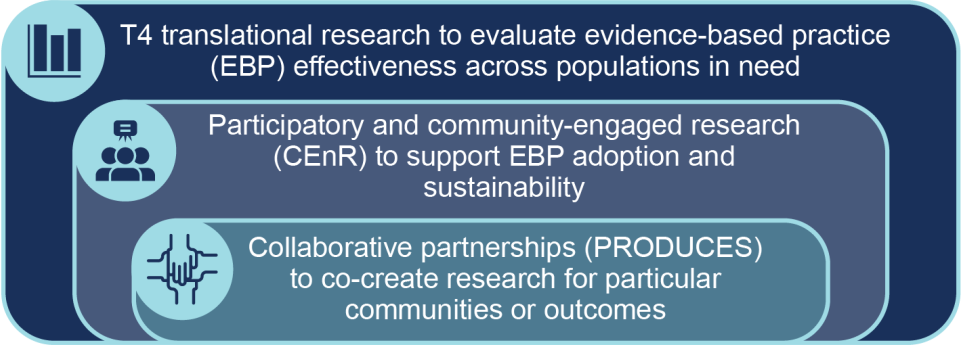
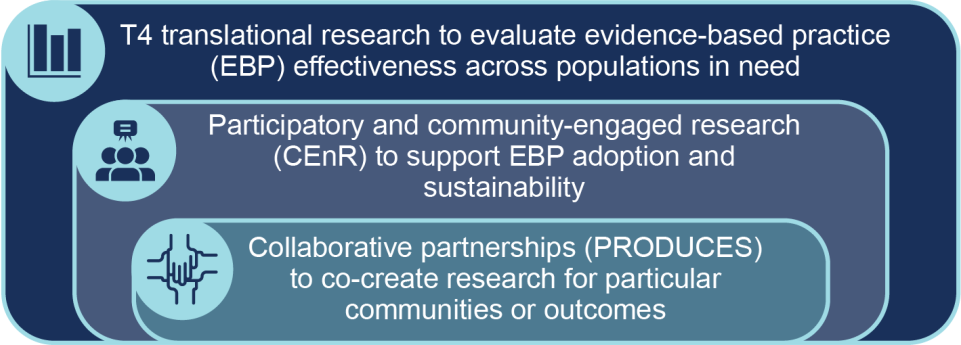
Our partners all have maintained a strong preference for participatory approaches, recognizing that true translational science requires community voice and leadership rather than just community approval (Kirk et al., 2016); that community partnerships remain central, not peripheral (Graham et al., 2016); and that community partnerships facilitate the greatest level of adoption and engagement between the partners, communities, and, ultimately, study participants (Key et al., 2019). Figure 1 provides an overview of the relevant frameworks we have adopted in this work (described below). Each study partner had previous experience using CEnR (Key et al., 2019) methods to evaluate interventions and programs, including SFP and family advocate programs to improve behavioral health and focus on the end-user priorities that would influence long-term adoption at the individual and family levels. Given the focus on behavioral health, the study team was also sensitive to the range of concerns that community members might face when deciding to use these services; the team then incorporated responsive strategies (including trauma-informed approaches) into the study during the co-design and implementation processes.
For the NJ ACEs study, we operationalized CEnR principles (Lyons et al., 2025) and practices (Centers for Disease Control and Prevention, 2025; Israel et al., 1998; Sheridan et al., 2017) to acknowledge and address community-based contextual factors and community member needs and preferences as critical considerations for successful intervention implementation, dissemination, sustainability and institutionalization. We also identified the need for a process-oriented participatory framework to anchor our partnership activities through the research process, and we incorporated flexibility, bidirectional communication, and resource sharing. We also found that we needed to directly address the project complexity, power dynamics between the partners, and potential conflicts of interest that could influence the project’s likelihood of successful administration and completion. Informed by Graham et al. (Blackburn et al., 2025; Graham et al., 2016) and others (Balls-Berry & Acosta-Pérez, 2017), we adopted the PRODUCES framework (Leask et al., 2019) to organize our collaborative co-creation as a partnership through the research processes, stages, activities, implementation, and outcomes of multidisciplinary systems-level implementation research.
PRODUCES Framework. Our partnership used the PRODUCES framework to coordinate and manage our partnership activities and dynamics. Because of our team’s experience in population-level behavioral health research, we expected that our partnerships would need to grow over time to include community interest-holder organizations and would therefore benefit from the partnership-focused elements of the PRODUCES framework. The PRODUCES framework (Leask et al., 2019) offers a structure for systems-level population health research and evaluation, including public health interventions, naming the interest-holder co-creation activities through various stages of the research process (e.g., planning, conducting, evaluating, and reporting) and fostering reproducibility. The framework focuses on seven aspects for researchers and their partners to consider during the co-creation process: (1) the problem or health behavior issue that the intervention is seeking to address, (2) the objective and aims of the participatory process, (3) the participatory methodologies that will be used for co-creation (i.e., design), (4) who will be the end users of the co-created intervention, (5) who will be engaged as co-creators, (6) how success will be measured and evaluated, and (7) how to scale the solution to a population level.
We joined the PRODUCES process-oriented framework with several engagement principles to support the collaborative nature of our partnership. These principles included focus on collaborative, equitable involvement of all partners in all phases of the research; integrating knowledge and action for mutual benefit of all partners; involving partners in a cyclical and iterative process; and addressing health from both positive and ecological perspectives (Key et al., 2019). We also followed general community engagement principles (Centers for Disease Control and Prevention, 2025), such as maintaining transparency about the purpose/goals of the engagement and who will be engaged, being knowledgeable partners about the community landscape and historical experiences in those communities, building relationships throughout the community recognition that “partnering with the community is necessary to create change and improve health,” operating with the expectation that shared power and control are necessary to remain flexible and keep up with changing community needs, and recognizing trustworthiness as fundamental for success. We also identified other participatory research practices as essential to our partnership, including (1) building relationships; (2) establishing working practices; (3) establishing a common understanding of the issue; (4) observing, gathering, and generating shared materials; (5) collaborative analysis; and (6) planning for reporting and sustainability (Centers for Disease Control and Prevention, 2025).
Considerations for Deciding to Partner and Collaborate on Population-Level Behavioral Health Research
The commitment to co-create and execute the NJ ACEs study required our study partners to inventory available resources to contribute to the study throughout the research process, from writing the proposal through the planning, implementation, analysis, and dissemination phases. Each partner had to preliminarily assess its capabilities to contribute to this study, recognizing the community landscapes, available staffing and financial resources, and potential benefits to its organizations and communities of service. Our team was committed to participatory approaches for collaboration, but the extent of participation required a series of discussions to describe the types of participation from each partner. Ultimately, we decided to co-create both the effectiveness and implementation research approaches through all study phases. We describe several of the key considerations that our partners addressed early in the research proposal process.
Partner Capacity. Partnership and shared resources are common considerations for service delivery in community context and, by extension, to implementation research in this setting. Institutional and team/person-specific priorities are typically central to partnership success and sustainability. When identifying its representatives, each partner chose the staff members who would be most capable of navigating the partnership, according to their expertise. RTI identified key experts in research related to behavioral health, human services, and implementation science. NJPN identified the executive director and the prevention director as study team members. IFPR identified the assistant director for research, development, and project management; the senior manager of the institute; and the clinical support supervisor as key study team members. In these early discussions, the partners were mindful of the supporting and deterring factors informing the feasibility of the research, which aligned with key elements of several of the participatory principles and co-creation aspects described above.
We followed the participatory principles of being transparent about the purpose of the partnership and integrating knowledge and action for mutual benefit of all partners to clearly describe the resources that would be required to conduct the study, including the administrative, staff, and financial supports required to develop the research proposal and complete the research activities. Following the PRODUCES co-creation framework, we focused on the aspects related to transparency, shared interest in the health behavior orissue that the intervention sought to address, clarity about the objective and aims of the participatory process for this research, who will be engaged as co-creators, how success will be measured and evaluated, and how to scale the solution to a population level. Partners were transparent about the resources their organizations could and could not offer, specified the value of participating in the research for their organizations, and prioritized identification and adoption of sustainable efforts their organizations could support in the long term.
Aligning Purpose, Value, and Priorities. The drivers for partnering in effectiveness and implementation research may vary with each interest-holder but reflect common interests to improve behavioral health by optimizing existing interventions. The research partner (RTI) aimed to contribute to the evidence base on interventions that address ACEs, substance use disorder, and social determinants of health. The health systems partner (IFPR) was interested in identifying potential added benefits of adapting its successful patient navigator service for new clients and settings. The statewide public health network (NJPN) aimed to enhance its established SFP offering with the patient navigator service to strengthen its offerings in communities disproportionately affected by ACEs, substance use disorder, and negative social determinants of health. For academic/research partners, the priority may be ensuring scientific rigor by sampling a representative group, seeking consistency in providers, confirming that relevant interest-holders are stable and reliable, and confirming that providers consistently adhere to the protocol. To participate in research, community organizations with wide population reach may prioritize consistent engagement and coordination from their partners, reasonable logistics, cost/compensation, and limited interruptions of normal service delivery. Finally, health system partners may prioritize improving clinical outcomes, minimizing additional costs, evaluating the function of current programs, and improving health. The alignment of interests and priorities supported our team efforts to build mutual trust and commitment, both of which can serve as buffers when the research encounters unforeseen challenges (like difficulty with community recruitment).
Previous Successful Institutional Collaboration. The partners for our project had previous collaborations, which were a starting point to evaluate alignment between the institution and team/staff priorities. At the institution level, the previous collaboration prioritized communication, timeliness, and transparency to execute the planned research activities. Specific efforts that supported the success of the previous partnership included (1) transparent, consistent, and timely communications with regular status updates; (2) clear delineation of project tasks and logistics; (3) willingness to invite other individuals to contribute to the research project; (4) respect for the skills and expertise of the project staff members; and (5) successful completion of the project (i.e., meeting project goals). The success of this previous collaboration smoothed the pathway for these current teams to partner. The current RTI team learned about the behavioral health priorities at NJPN and IFPR from the prior RTI team that worked with NJPN and IFPR. The prior RTI team also introduced the current RTI team to NJPN and IFPR.
Moving from Conversation to Commitment. We prioritized moving from preliminary conversations to concrete commitments by ensuring alignment of organizational capacities, values, and mutual goals. This is best achieved when collaborative efforts are based on past interactions and partnerships. We held regular engagement meetings every other week across the full partnership team to maintain alignment, establish trust, create relationships that enabled partners to be comfortable in challenging assumptions, develop collective ownership of the project outcomes, and navigate implementation challenges collaboratively. This created a resilient infrastructure capable of advancing from evidence to impact at the community and system levels.
Key Considerations After Deciding to Partner: Committing to Co-Creation
After deciding to partner and pursue this research study, the partners had several decisions to address in the initial phases of the study planning process. The considerations shown above represent early and recurring topics that each partner addressed (although several additional decisions were required to fully develop the study proposal, protocol, and implementation plan). Each consideration is addressed below.
The Opportunity to Co-Create. Participatory models of interest-holder engagement chart the various partners’ levels of engagement on a continuum (Key et al., 2019; Palinkas et al., 2025). Each of the partners for this work generally had distinct contributions to the research based on its typical service delivery models, typical clients, research experiences, and communities served. Although the partner capabilities might be obvious, the decision to co-create research is heavily influenced by organizational capacity and readiness during the planned window of research activity. Each partner of our research team evaluated its capacity and readiness to facilitate and complete a co-created research study directed toward providing effective, improved, and high-quality community services for behavioral health. Each partner also needed to evaluate its capacity to engage in the study implementation across the research stages (e.g., planning, implementation, analysis) and identify its expected roles, contributions, and activities. This self-evaluation also included an assessment of the strengths, weaknesses, and opportunities and challenges within the collective study team to ensure the study would be properly implemented and completed. For NJPN and IFPR, this included an assessment of their organizational infrastructure and staffing, local context, and barriers and facilitators to completing the study activities. As a result, the team was able to identify concrete opportunities during the research process to integrate each partner into the research efforts, including (1) elevating NJPN prevention activities in new and existing communities; (2) embedding NJPN and IFPR staff in research activities to be part of the team contributing evidence of effectiveness; and (3) assessing the benefits of the intervention and collaboration that complement the traditional RCT-based assessment of effectiveness.
Establishing Shared Terminology and Milestones Across Partners. Understanding the contextual factors that can influence study effectiveness requires partnership. Though the initial research design may be literature-based, clear attention to the environment and community in which it will be used is critical. True measures of effectiveness are most beneficial when all partners associated with or receiving prevention services are engaged in the design process; this can include partners along the full pathway from evidence-based intervention design to delivery and use. In behavioral health, these partners tend to span health services, public health, human services, clinical care, community organizations, and others who use discipline-specific language. Each type of service has its own metrics of improvement or benefit (Blackburn et al., 2025). In refining the study elements and defining effectiveness, the team used a co-creation approach to come to a common language that capitalizes on the multidisciplinary expertise of the team, define initial strategies, revise those strategies using incoming information known to each partner, and meet implementation milestones with intentionality for each partner-specified concern. The team also was able to use the constructs of the implementation framework (CFIR) to structure conversations around domains of shared interest (e.g., innovation, local attitudes, communication), and these discussions encouraged partner alignment in how best to define and capture those domains in the study. The study partners also prioritized having a shared understanding of how the study would be evaluated and the primary data collection requirements around process, effectiveness, and cost of the intervention.
Proposal Planning Process. As part of the decision process, our partner teams had to make decisions about their preparedness to pursue this research opportunity and allocate institutional resources to participate in the proposal writing process. Each partner was then responsible for identifying the key personnel who could work on the proposal, lead the implementation of the research activities, and deliver the intervention services. Simultaneously, the partners had a series of meetings about the proposed study activities to identify (1) the institutional interest-holders that determine how administrative coordination would work between partners and (2) necessary staff roles. These virtual meetings were ideal opportunities to cultivate relationships and engage partners about their planned contributions to the project designs and proposal content. The proposal planning process was an opportunity to assess the strength of the partnership; to better facilitate this relationship, our teams ensured that the attendees had their cameras on during virtual meetings, and partners volunteered information about their experiences working with the potential study communities, participants, and service providers. The research organization, for example, prioritized in-person visits to the public health organization for the planning phase to participate in the SFP training and to meet with prospective facilitators. These in-person opportunities helped the research team connect information and individuals face-to-face and share resources that were designed for in-hand use rather than digital review. This process also elevated the topics that would need careful and extended discussions, where there might be need to deliver hard feedback, and the benefits of taking on potentially complex or difficult tasks.
Areas of Expertise. The earliest preliminary conversations about the study discussed contributing organizational expertise to implement the study. RTI anticipated being responsible for key administrative research tasks, including preparation of institutional research board materials, organizing research meetings, collecting data and performing analyses, and preliminary preparation of study content for dissemination. NJPN maintained the extensive local and state partner network of agencies delivering multiple human services offerings within communities. IFPR brought extensive experience in facilitating agency engagement and preparedness and has a long history of partnering in research. IFPR and NJPN’s expertise allowed us to tailor our site engagement process, identifying emerging information and other key data for decision-making and determining the need for EPIC health system software trainings and SFP trainings.
Organizational Capacity and Readiness to Begin Co-Creating Research. To evaluate organizational capacity for co-creating research, the team assessed the organizational infrastructure required to support the study (through administration, for example); training needs, to ensure service delivery resources were appropriate and available; previous experience in co-leading and co-designing research; and alignment of routine organizational practices with the research process activities that could affect the scientific rigor and expected implementation during the study.
Each partner evaluated its readiness to participate in its expected roles in each stage of the study. Organizations with the capabilities to implement study activities still needed to be prepared for compromise, adaptation, and flexibility to engage in the partnership for co-creation. Co-created research is more effective when rooted in a systems perspective with approaches that acknowledge nonlinearity and encourage local adaptation (Greenhalgh et al., 2016). The success of co-creation processes depends on the quality of the relationships among co-creators. Robust governance, skilled facilitators, relationship-building efforts, and conflict management are all necessary for ensuring success.
The strength of our relationships allowed the partners to set expectations during the proposal planning process and the implementation planning phase. The research team prioritized details about the scientific design and rigor; the public health organization prioritized SFP service delivery, site identification, and community selection; and the health system prioritized service delivery from the family advocate. Each partner shared the detailed nature of its priorities for the other partners’ understanding. For example, the research team shared materials to demystify the structure, format, and typical implementation of the cluster-RCT research design and the quantitative methods used for community eligibility and sampling approach. This lowered the risk of pitfalls caused by miscommunications or misunderstandings about the information being collected in the study and used to inform design-related requests. As an example, we carefully evaluated decisions about family eligibility for participation based on their family structure, previous experience with SFP, or geographic place of residence.
Site and Service Provider Interest and Availability. NJPN has statewide connections and strong, positive relationships with the county prevention agencies that would be providing the program services in both the treatment and control communities. They leveraged these relationships and distributed interest forms to county agency leads to gather information specific to the county agency’s history and capabilities in implementing the SFP, other considerations for participating, and any needs they may have. NJPN worked to recruit the interested agencies, which allowed RTI to focus on developing relationships and rapport with the agency staff, who were willing to learn and engage in unfamiliar research activities, especially those related to data collection.
Streamlining Research Activities. Key considerations in the early phases of this study’s co-creation process focused on whether the co-creators could ensure that the evaluation was sufficiently objective and rigorous while sufficiently flexible to reflect the realities of implementing and evaluating a novel intervention within a complex, real-world environment. In some instances, RTI described key elements to maintain the rigor of the study and turned to IFPR and NJPN to identify necessary modifications and adaptations to ensure intervention delivery across multiple communities. In other instances, NJPN and IFPR described existing institutional processes, and the collective research team strategized to identify alignment between those processes and our research study goals. Recognizing these inherent challenges, the study team sought to balance scientific rigor and implementation within the design of the intervention and the evaluation.
A key example of our focus on streamlining research activities was data collection. Discussions with the public health organization and the health system organization covered administration of the data collection instruments and processes; the site agencies and service providers to the participating families would be responsible for administration. The team prioritized strategies to minimize burden on each of the participating individuals. For example, the partners assessed whether requisite data were available via other sources and prioritized goal-limiting the frequency and length of data collection activities while capturing essential study data. The research organization then developed and distributed flowcharts to visualize data collection processes and prepared tailored data collection trainings for the lead site and agency contacts and the service providers. Other examples of streamlining research activities include ensuring that NJPN and IFPR were able to contribute to research dissemination activities (including this paper) while closely monitoring any expectations that exceeded organizational capacity.
Other key decision points for co-designing the intervention included determining which SFP curriculum (i.e., SFP-7, SFP-11, or SFP-14) was an appropriate length for integrating the family advocate intervention, determining the appropriate dosage of interactions between the family advocates and families participating in SFP, and identifying additional adaptations that may be required to deliver the intervention across multiple diverse communities experiencing disproportionate levels of ACEs and substance use. For example, NJPN had to review and confirm that the service providers and sites were prepared to deliver the selected format for SFP, and IFPR had to review and confirm that FAs would be available to serve each community site on the planned schedules and communication frequency. SFP facilitators also noted the importance of building rapport with participants to the partner team. The partners agreed with the SFP facilitator recommendation that FAs would be introduced to the participating families after the first session to provide focused times for the participants to establish relationships in the first week with the SFP facilitators and in the following weeks with the FAs. To evaluate the intervention, the study team agreed to use a Hybrid Type 1 design (Curran et al., 2012) which is ideally suited for rigorous evaluations involving interventions with a strong evidence base (like SFP) while simultaneously obtaining evidence for incorporating new delivery methods (such as family advocates) and new populations.
Flexible Decision-Making. Using a Hybrid Type 1 study design allowed our research team to meaningfully evaluate the intervention and assess the needs for flexibility, adaptation, and compromise in both the service delivery and research process activities. The partners had to assess whether their business-as-usual activities could accommodate the research activities and assessments related to implementation, effectiveness, and cost of the intervention delivery. The partners also examined how staffing would need to be modified both for the research process and for the intervention service delivery. The study sampling strategy also required adaptation based on the integration of service provider knowledge and traditional quantitative data resources, influencing our study definitions of community eligibility and provider availability. Continuous input from IFPR and NJPN, reflecting the needs of their agency partners, community agencies, and families directly affected, helped the team clarify and accommodate important community differences while implementing study activities consistently. Over the course of the study planning phase (Year 1), the team recorded 82 questions in a decision log to track and make decisions about considerations that influenced the study design and planned implementation. The team has used this decision log as a reference for the team to remain aligned.
One example of our focus on flexibility was related to enrollment. NJPN had previous experience identifying and enrolling families from different sites (e.g., schools, referrals from other service providers) and having those site partners help families complete paperwork; the research team adapted this same approach, appreciating that getting families to complete study forms or documents at another interim point before the intervention sessions began might be difficult. Additionally, our study partners recognized the benefits of doing this co-created research.
Evaluating Additional Partnership Needs for Successful Study Implementation. In addition to the initial institutional collaborations, the success of the project depended on expanding partnerships across multiple domains. The team identified a need for service implementation partners, advocates in the policy and systems-level environments, data and technology partners, citizen scientists, and community champions. For service implementation, partnering with agencies already embedded within vulnerable communities enabled culturally competent implementation. These organizations not only delivered services but also informed real-time adaptations of the intervention. At the policy and systems level, advocates were needed because the team recognized that wide-scale change requires policy shifts. The team cultivated relationships with state agencies, coalitions, and health systems to advocate for the institutionalization of successful models (e.g., integrating the Family Advocate model into standard practice). To facilitate long-term sustainability, the team developed partnerships with data and technology partners specializing in IT and health record systems teams (e.g., EPIC integration) to embed data collection and referral tracking into existing service delivery infrastructures. This practice enabled the service delivery team to identify the prime early touch points to deliver services in real time and allowed each study partner to identify the benefits to its organization and populations served. We also aimed to partner with community members and family advocates to serve as citizen scientists and community champions to extend engagement beyond traditional service providers. Their lived experience brought critical insights into program relevance, sustainability strategies, and the scaling process.
Conclusions
Successful co-creation partnerships for behavioral health research hinge on the thoughtful leveraging of existing institutional relationships and the intentional initiation of new ones. As a general approach, we value cultivating partnerships that are relational and less transactional. In our work, we prioritized moving from preliminary conversations to concrete commitments by ensuring alignment of organizational capacities, values, and mutual goals. Drawing on positive past interactions and collaborations, we moved quickly to identify mutual interests and complementary expertise. Our history of successful partnerships (e.g., between RTI, NJPN, and IFPR) provided a strong foundation of credibility and relational capital. This trust allowed for candid discussions about research design challenges and opportunities for adaptation, strengthening the relationship. Lessons from our collaborative processes reinforced the importance of compromise, flexibility, and iterative adaptation—all critical for successfully moving interventions from localized pilot success to system-wide adoption.
Importantly, we integrated co-design and participatory principles, like those described in the PRODUCES framework, that emphasize tailoring interventions to the needs and contexts of those most affected. Additionally, using these frameworks allowed the team to predict and then navigate potential pitfalls, including needs to be addressed through preparation and organizational readiness. Early conversations were iterative design sessions where community partners actively shaped data collection methods, intervention adaptations, and implementation plans. Building upon previous successes in partnerships, we committed to collaborative design by actively soliciting feedback on proposed research activities and adapting on the basis of community partner input. The early partnership phase was marked by candid discussions, critical feedback loops, and revisions to initial research plans to better align with partner expectations and realities on the ground. Through this process, the partnership model evolved from passive interest-holder engagement to active co-creation. Partners were both participants in and co-architects of the research strategy, ensuring that the final design reflected the realities and strengths of the communities we sought to serve. We encourage research teams planning to develop co-created behavioral health research to review the considerations from our experience as part of the research design process to accommodate shifting contextual, institutional, and community resources and priorities.
Data Availability Statement
In this publication, we do not report on, analyze, or generate any data.
Acknowledgments
The study is supported by the Centers for Disease Control and Prevention, National Center for Injury Prevention and Control, under cooperative agreement 1U01CE003482-01-00. The content is solely the responsibility of the authors and does not necessarily represent the official views of the Centers for Disease Control and Prevention.
The authors thank Drs. Jiang, Losby, DePadilla, and Anderson from the Centers for Disease Control and Prevention for the helpful feedback that they provided on an early version of the manuscript. We also acknowledge our partners at New Jersey Prevention Network and the Institute for Prevention and Recovery at RWJBarnabas Health for their ongoing commitment and research collaboration.