
Introduction: Framing the Need for Methodological Alignment
Researchers value qualitative methods for their flexibility, but that same flexibility can lead to research without epistemological coherence. In contrast to approaches that assume a single objective reality, qualitative research traditions often emphasize multiple interpretations and context-dependent understandings of social phenomena (Guba & Lincoln, 1994). Although methodological diversity encourages new approaches, selecting epistemologically coherent methods is challenging. For example, a researcher with a constructivist epistemology, who assumes that knowledge is co-constructed through social interaction, may select an inductive method fitting to their research question, such as grounded theory. Without clear guidance, however, researchers can inadvertently pair this stance with research practices grounded on post-positivist assumptions, such as applying a fixed coding framework or deductive content analysis, resulting in epistemological incoherence (Glaser, 1978). Misalignments have practical consequences. They can constrain sampling decisions and trustworthiness approaches, for example, by limiting the range of participants included, restricting the depth of data collected, or applying analytic procedures that do not fully capture the phenomena of interest, in turn reducing the validity and interpretive potential of research findings (Nowell et al., 2017). The diversity of qualitative approaches brings both promise and challenges, particularly challenges ensuring approaches align with their underlying philosophical assumptions.
We developed the Qualitative Method Matchmaker to guide researchers and learners through a structured, reflective process of selecting qualitative methods, sampling strategies, and trustworthiness approaches (approaches meant to demonstrate trustworthiness in the study’s findings, such as coding comparison techniques) that align with their epistemological stance. Unlike prescriptive guidelines or static checklists, the Qualitative Method Matchmaker fosters critical thinking by posing targeted questions about the study’s goals, context, and constraints. For example, the tool asks whether the researcher aims to build on existing theory and whether emergent coding is expected. These questions guide users into appropriate and harmonious methodological routes, such as grounded theory for inductive theory-building or framework analysis for structured analysis (Ritchie & Spencer, 1994; Strauss & Corbin, 1990). By making the methodological choices explicit, the Qualitative Method Matchmaker empowers users to design both philosophically sound and practically feasible studies. The initial development of the Qualitative Method Matchmaker was informed primarily by applied qualitative research contexts, particularly health and health services research, although the decision framework may be adapted for qualitative research in other disciplinary areas.
Developing the Qualitative Method Matchmaker, we drew on insights from diverse disciplines where epistemological alignment has been explored, including psycholinguistics (Kobayashi Hillman et al., 2018), human resource analytics (Ellmer & Reichel, 2021), and dialogic interviewing (Roulston, 2018). Although these disciplines have highlighted the value of coherence, they have not operationalized it as a guiding principle for selecting methods. The Qualitative Method Matchmaker builds on these ideas to create an accessible, expandable framework that can evolve with methodological innovations. Its current version integrates seven commonly used qualitative analytic approaches, including classical content analysis, framework analysis, and grounded theory, while mapping each to corresponding sampling practices and trustworthiness approaches. By combining rigorous conceptual foundations with a user-centered design, we aim for the tool to support both research practice and pedagogy, fostering a deeper understanding of qualitative rigor.
In the current paper, we present the formative evaluation of the Qualitative Method Matchmaker, focusing on its development and potential to enhance epistemological alignment in qualitative research. We argue that the Qualitative Method Matchmaker offers a novel solution by providing a structured yet adaptable framework to bridge theory and practice. The following sections will explore the tool’s design, iterative development, and evaluation, drawing on feedback from researchers, educators, and students to assess its impact. By addressing the gap between philosophical principles and practical application, we seek to empower qualitative researchers to design studies that are both rigorous and thoughtful, thereby advancing the field.
Methods
We designed the Qualitative Method Matchmaker to promote epistemological coherence in qualitative research planning. This aid guides researchers through method selection, sampling strategies, and trustworthiness measures in keeping with the philosophical assumptions of their study. We developed the Qualitative Method Matchmaker in an iterative multistep process that included a focused review of literature, review by expert panels, creation of an AI prototype, and rounds of iterative refinements based on feedback from qualitative methodologists and technical programmers.
Theoretical and Conceptual Foundations
Our project is grounded in the long-standing need for methodological alignment in qualitative research where the methodologies available should be understood to portray the epistemological stance and intent of the researcher (Carter & Little, 2007; Crotty, 1998; Lincoln & Guba, 1985). When epistemology (i.e., what is the nature of knowledge and how can we know it?), methodology (i.e., what overarching approach or logic guides how knowledge is generated?), and method (i.e., what tools and procedures do we use?) conflict with each other, studies may generate results that are not rigorous, rich, or interpretively credible (Barbour, 2001; Caelli et al., 2003). The Qualitative Method Matchmaker aims to support decision-making by considering how assumptions about knowledge affect sampling plans, coding approaches, and trustworthiness approaches. For example, inductive and exploratory studies often use purposive or theoretical sampling and reflective trustworthiness approaches, whereas deductive design may emphasize systematic sampling and procedures such as intercoder agreement (Nowell et al., 2017; Patton, 2015). By turning these epistemological variations into explicit decision pathways, the tool aims to reduce standard pitfalls in qualitative study design and promote more-consistent methodological integrity.
Phases of Development
Below, we describe the seven development phases of the Qualitative Method Matchmaker.
Phase 1: Initial Decision Tree Development
The first phase of the Qualitative Method Matchmaker project involved designing the initial decision tree to guide researchers through method selection, sampling strategies, and trustworthiness approaches aligned with their epistemological stance. The lead author, drawing on expertise in qualitative research and a targeted literature review, developed a structured branching logic model to translate foundational methodological concepts into actionable decision points.
The decision tree was built to promote epistemological alignment, ensuring that analytic approaches correspond to the researcher’s philosophical assumptions (Carter & Little, 2007; Crotty, 1998; Lincoln & Guba, 1985). For example, we paired classical content analysis (Neuendorf, 2017) with post-positivist assumptions and systematic sampling, while we linked Strauss and Corbin’s version of grounded theory (Strauss & Corbin, 1990) to an inductive, theory-generating orientation, theoretical sampling, and constant comparison. We also mapped trustworthiness approaches to each method, aligning with epistemological stance (Nowell et al., 2017; Sandelowski, 1993).
To scaffold this logic, the decision tree includes a series of structured questions prompting users to clarify their analytic goals, planned use of theory, openness to emergent coding, and resource constraints. This branching model was selected to balance structure with flexibility, helping users navigate toward methodologically coherent options while encouraging reflexivity about their choices. Although the decision tree presents a structured set of questions, qualitative research often proceeds iteratively, and researchers may revisit methodological decisions as their understanding of the data evolves.
The initial version of the Matchmaker included seven qualitative analytic approaches selected for their philosophical diversity and analytic breadth:
-
Classical content analysis (Neuendorf, 2017)
-
Conventional content analysis (Hsieh & Shannon, 2005)
-
Directed content analysis (Hsieh & Shannon, 2005)
-
Framework analysis (Ritchie & Spencer, 1994)
-
Grounded theory (Glaser & Strauss, 1967)
-
Grounded theory (Strauss & Corbin, 1990)
-
Rapid analysis (Beebe, 2001; Hamilton & Finley, 2019)
The Matchmaker includes two grounded theory traditions: the original grounded theory approach described by Glaser and Strauss (1967) and the later Strauss and Corbin (1990) approach, which differ in their treatment of theoretical sensitivity and the role of prior concepts during coding.
We chose these methods to represent a range of deductive, inductive, and hybrid approaches, covering distinct epistemological paradigms from post-positivist to constructivist to pragmatic. This structure also creates a flexible foundation for adding additional qualitative methods in the future, such as interpretive phenomenological analysis (IPA), Riessman’s narrative analysis, or reflexive thematic analysis, without disrupting the tool’s core logic.
The lead author paired each included method with appropriate sampling strategies and trustworthiness approaches based on established literature. The goal was to create a practical, usable, literature-informed tool that supports both rigor and accessibility for researchers at various levels of experience. This phase established the groundwork for expert review, AI integration, and iterative refinement in subsequent phases.
Phase 2: Expert Review of Decision Tree
Four qualitative experts reviewed the initial version of the Qualitative Method Matchmaker decision tree, two with PhDs in health and social policy and two with master’s of public health degrees. Each reviewer has more than 10 years of experience designing, implementing, and reporting on studies using qualitative methods, particularly in health-related research and applied evaluation contexts. Their expertise included both academic and consulting environments, ensuring a balance of theoretical and practical perspectives.
The review process was asynchronous to accommodate scheduling needs. We shared the decision tree via a collaborative document platform, where reviewers provided feedback using tracked changes and comments. This allowed for detailed, line-by-line critique without the constraints of real-time meetings. The lead author compiled all feedback, reviewing tracked comments to identify thematic patterns and actionable suggestions. The resulting revisions focused on improving question clarity, refining the branching logic, and enhancing usability. We documented these updates and shared them with the programming team for implementation in the next development phase.
Phase 3: AI Prototype Development
In Phase 3, two expert programmers collaborated with the lead author to develop the initial AI prototype of the Qualitative Method Matchmaker. This version translated the decision tree logic into an AI-assisted chatbot that allows users to input free-text descriptions of their project, such as an elevator pitch or study summary, and receive tailored methodological guidance.
We developed the AI prototype using graph-based RAG (retrieval augmented generation) architecture implemented with a multicomponent technical stack: Streamlit for the user interface, LangChain (Bergmann & Stryker, 2024) for orchestrating AI workflows, large language model capabilities, and a custom graph to represent the decision tree structure. We chose graph-based RAG over traditional retrieval approaches because it maintains the structured relationships among qualitative methods, sampling strategies, and trustworthiness techniques while enabling semantic search. Unlike systems that would treat each method independently, the graph structure preserves epistemological connections between methodological choices, using a custom retriever that combines Facebook AI Similarity Search (FAISS; Douze et al., 2024) with graph traversal to expand from semantically similar methods to their connected attributes.
The system implements three specialized processing chains: a methodology selection chain for primary methodological recommendations, an attribute selection chain for sampling and trustworthiness strategies, and a conversational chain for clarifications and follow-up questions. Rather than requiring rigid question sequences, the system uses dynamic routing to determine whether user input should trigger methodological selection, attribute refinement, or conversational responses. The prototype employs sentence transformers (Reimers & Gurevych, 2019) to create vector embeddings of both method descriptions and user input (using the default all-MiniLM-L6-v2 model), enabling semantic matching between project descriptions and appropriate methodological approaches defined in the decision tree even when users do not employ exact methodological terminology. The system tracks answered decision points and implements logic to ensure critical information, as defined in the decision tree, is obtained before making final recommendations.
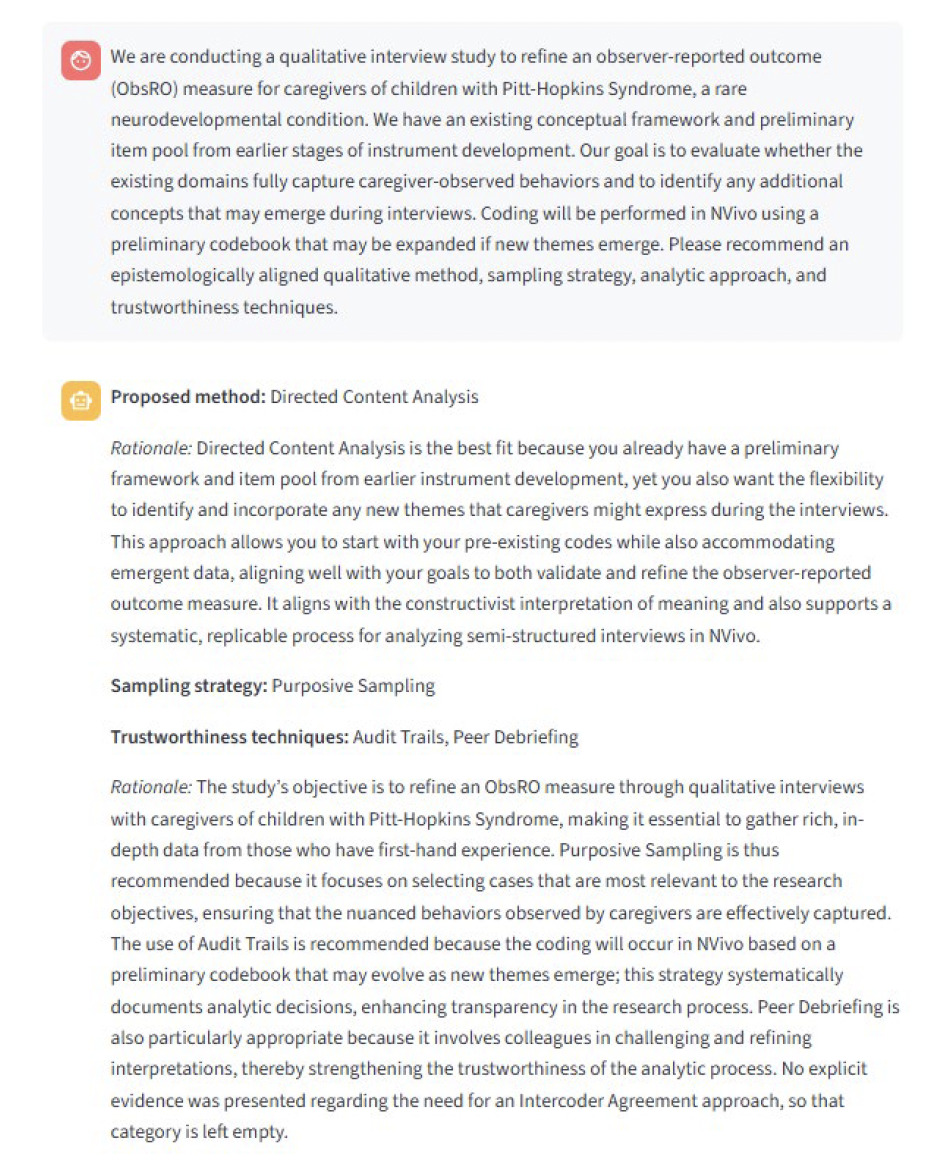
This approach combines large language model capabilities with decision-tree–informed retrieval, allowing the tool to extract relevant information from user input and map it to appropriate recommendations. On the basis of the user’s description, the chatbot suggests a qualitative method, a compatible sampling strategy, and trustworthiness approaches aligned with the project’s epistemological stance. We tested the initial prototype using example text simulating real-world use cases. For example:
“I’m doing a rapid-turnaround evaluation for a new Medicaid program. We’re conducting 30 semistructured interviews with providers and state administrators. We have about 4 weeks to analyze the data and deliver findings to the client. We’ll use Zoom for interviews and take detailed notes with some light transcription. We have NVivo, but we may not use it if time is tight. We have a logic model, and I want to use that to organize our findings, but we’re also open to unexpected themes emerging.”
This scenario allowed the development team to evaluate the AI’s ability to interpret the study’s purpose, timeline constraints, analytic approach, and openness to emergent findings. From this input, the prototype recommended an approach consistent with framework analysis or rapid analysis, purposive sampling, and team-based triangulation for trustworthiness, aligning with the underlying decision tree logic. This phase established the foundation for live expert testing and further iteration in subsequent phases.
Phase 4: Expert Review of AI Prototype
After the initial AI prototype development, we conducted a synchronous feedback session with the four qualitative experts engaged in earlier phases. The objective of this session was to evaluate the AI-assisted version of the Qualitative Method Matchmaker, focusing on usability, conceptual framing, and potential applications.
To structure the feedback process, the team used a design thinking approach, specifically the “I like, I wish, I wonder” framework developed at the Stanford Design School (Hale et al., 2018). This method fosters collaborative, constructive critique by prompting participants to share:
-
“I like…” Observations about tool strengths or positive aspects
-
“I wish…” Suggestions for improvements or additional features
-
“I wonder…” Reflections on future use cases, potential concerns, or opportunities for expansion
This structured reflection technique supports iterative tool development by balancing positive reinforcement with actionable recommendations, consistent with human-centered design and innovation facilitation practices. During the session, the development team presented a live demonstration of the chatbot tool, showing how it processed user input and generated recommendations for method selection, sampling, and trustworthiness approaches. The lead author recorded all feedback in real time, and we categorized the feedback thematically after the session. This input informed the next phase of iterative refinement.
Phase 5: Iterative Refinement With Technical Team
In Phase 5, the development team collaborated closely to refine the AI prototype using feedback from Phase 4. This iterative refinement process focused on improving the tool’s usability, educational value, and alignment with user needs identified during expert review.
The lead author and the programming team met daily to discuss revisions, prioritize updates, and test new iterations. Key enhancements implemented during this phase:
-
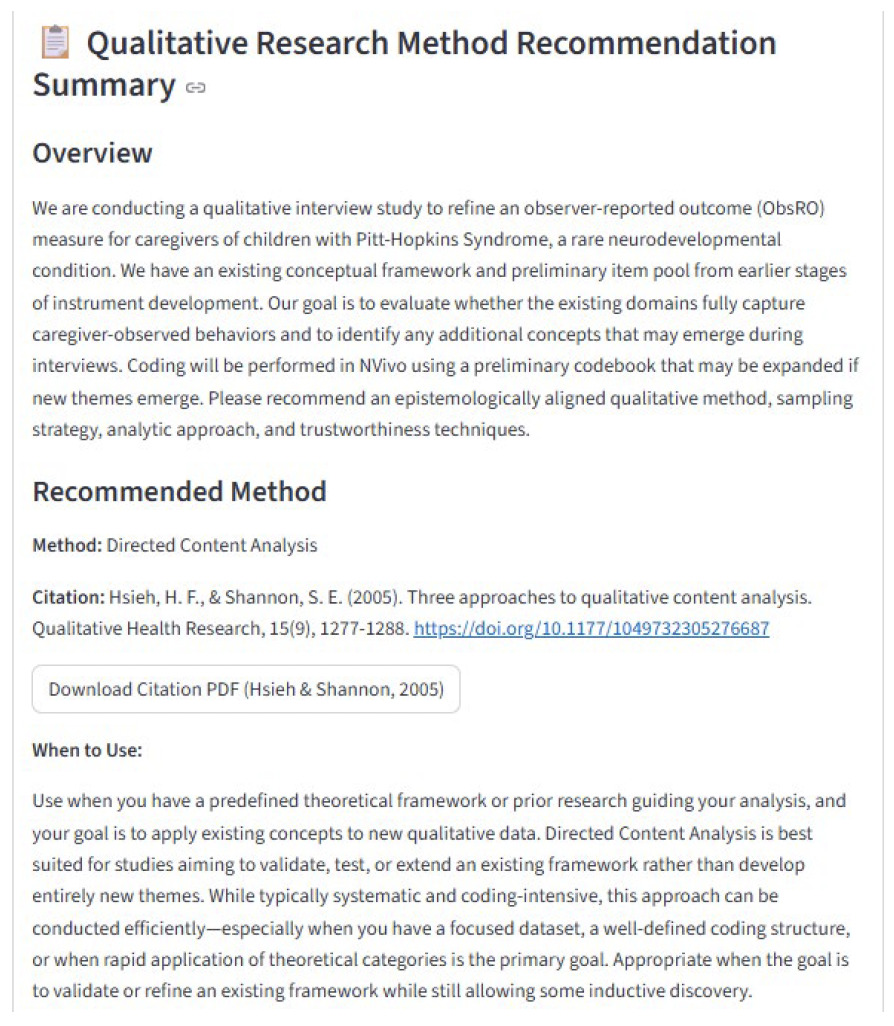
Addition of an Educational Summary Page: Added a summary at the end of the decision process explaining the rationale behind the recommended method, sampling strategy, and trustworthiness approaches. This summary reinforced the tool’s pedagogical goals by clarifying how epistemological assumptions shape methodological choices.
-
Integration of Learning Resources: To support deeper learning, the team embedded links to example peer-reviewed articles, book chapters, and methodological guides associated with each analytic approach in the summary output. The development team curated these example references using commonly cited methodological literature. The tool also includes a feedback feature that allows users to suggest additional articles or resources for consideration in future updates. As the Matchmaker evolves, the development team will periodically review and update these resources to reflect emerging literature and methodological guidance.
-
Refinements to Language and Flow: Using the expert feedback, the team updated chatbot prompts and response language to improve clarity, reduce jargon, and enhance the conversational flow of the tool.
Through these refinements, we aimed to create a tool that functions not only as a method selector but also as a reflective learning support. Although the Qualitative Method Matchmaker provides specific recommendations, it also encourages users to engage with the rationale behind each suggestion through linked resources and explanatory summaries. This structure promotes awareness of how epistemological assumptions shape methodological decisions. The iterative process continued until the team stabilized a version of the tool ready for further expert testing.
Phase 6: Expert Review Follow-up
After we implemented the refinements from Phase 5, the four qualitative experts participated in a second round of review to evaluate the updated AI-assisted tool. In this follow-up phase, reviewers tested the Qualitative Method Matchmaker independently, using real or hypothetical study scenarios to explore how the tool generated method, sampling, and trustworthiness recommendations.
The review process was asynchronous to accommodate diverse schedules and allow reviewers to engage with the tool at their own pace. Each expert received a unique access link to the application, along with instructions to explore various inputs and test how the tool responded to different project descriptions.
We collected feedback through email correspondence and through tracked notes in a collaborative document platform. We encouraged reviewers to focus on usability and navigation, clarity and appropriateness of the outputs, educational value of the summary pages and linked resources, and any lingering concerns about epistemological alignment or methodological recommendations. The lead author compiled the feedback and documented suggested updates. This input informed a final round of adjustments in preparation for tool stabilization.
Phase 7: Final Updates and Stabilization
In Phase 7, the development team incorporated feedback from the follow-up expert review to finalize the Qualitative Method Matchmaker tool. This phase focused on making targeted adjustments to improve usability, refine recommendations, and enhance the educational components of the tool. Key updates included the following:
-
Refining Output Language: The team simplified the wording of the tool’s recommendations to ensure accessibility for users at various levels of qualitative expertise. We adjusted language to reduce technical jargon while preserving methodological accuracy.
-
Clarifying Method Rationales: We added more explanatory text to the summary pages to clarify why specific methods, sampling strategies, and trustworthiness approaches were recommended.
-
Enhancing Linked Resources: The team curated and expanded the list of linked articles and book chapters included in the educational output, giving users broader options for further learning.
-
Improving User Flow: Per usability feedback, we made minor adjustments to chatbot prompts and interface flow to streamline navigation and reduce user confusion.
This final round of updates resulted in a stabilized version of the Matchmaker tool, ready for internal dissemination and planned piloting in educational and applied research settings. The focus of this phase was to balance methodological rigor with practical usability, ensuring the tool could function as both a methodological decision aid and a pedagogical resource. The current version of the Qualitative Method Matchmaker is an internal tool available to researchers within RTI International. Future development may include broader dissemination to academic and applied research communities.
Results
Overview of Refinements Across Phases
Across the seven development phases, the Qualitative Method Matchmaker underwent iterative modifications to improve clarity, usability, and alignment with qualitative research principles. Key refinements included simplifying the initial coding structure question, clarifying distinctions in sampling logic between deductive and inductive approaches, and revising method descriptions to better articulate the trade-offs between rapid and in-depth analysis. Additional enhancements focused on expanding the tool’s educational components and integrating linked resources to support user learning. Table 1 summarizes major modifications made during each phase.
Final Tool Features
The finalized Qualitative Method Matchmaker guides users through a structured decision pathway to recommend a qualitative method, sampling strategy, and trustworthiness approach aligned with their study’s epistemological assumptions and practical constraints. The tool’s logic is based on a set of branching questions, each routing the user to method options based on their analytic intent.
Final Tool Output Examples
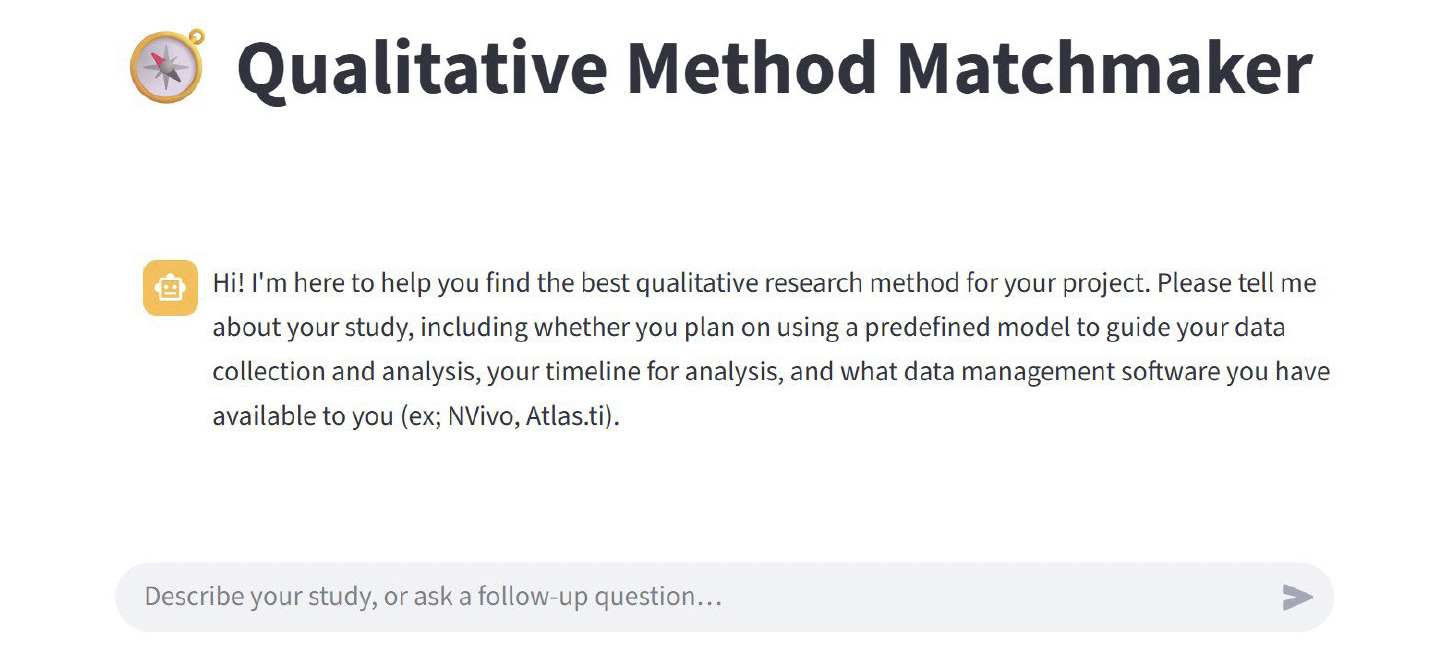
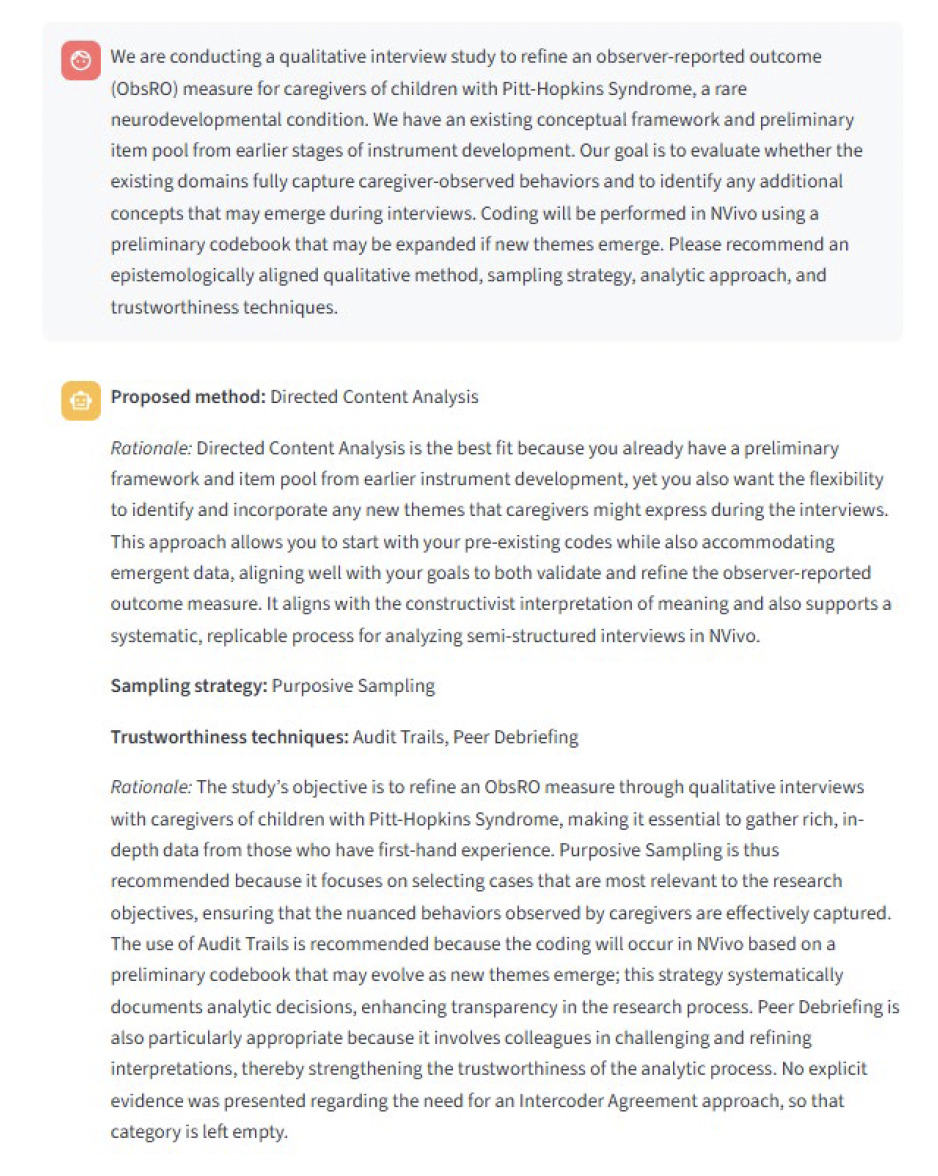
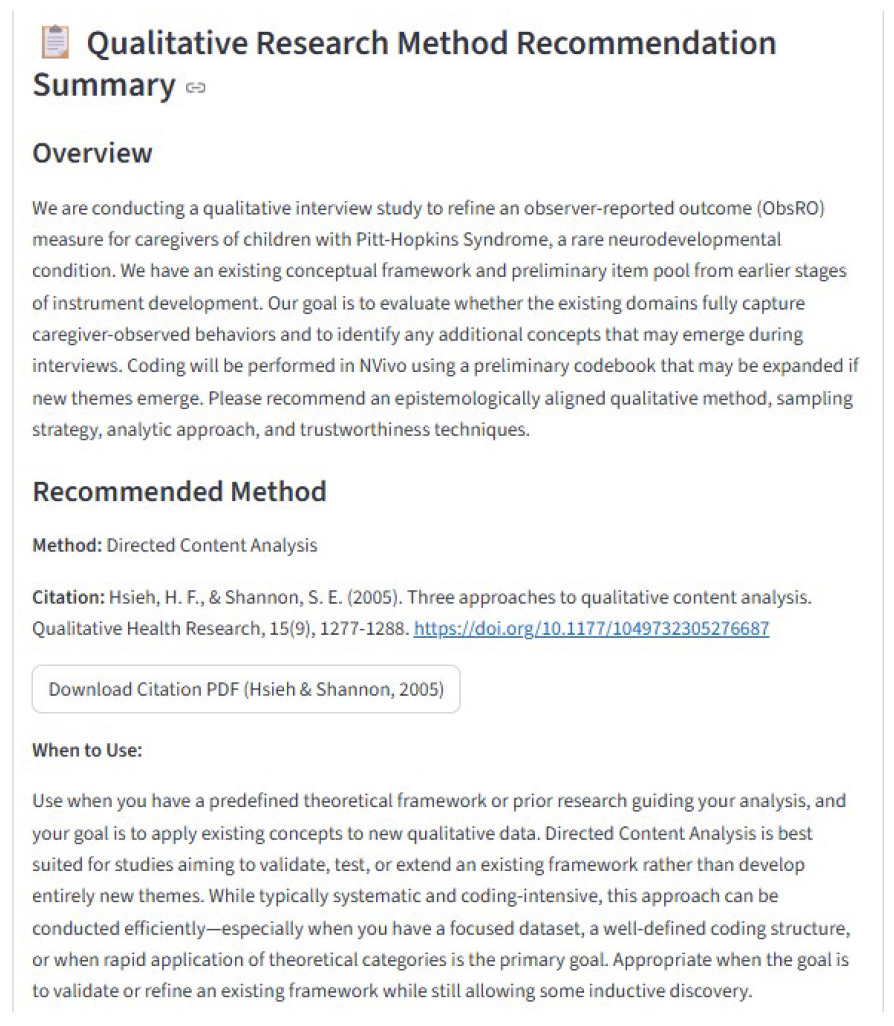
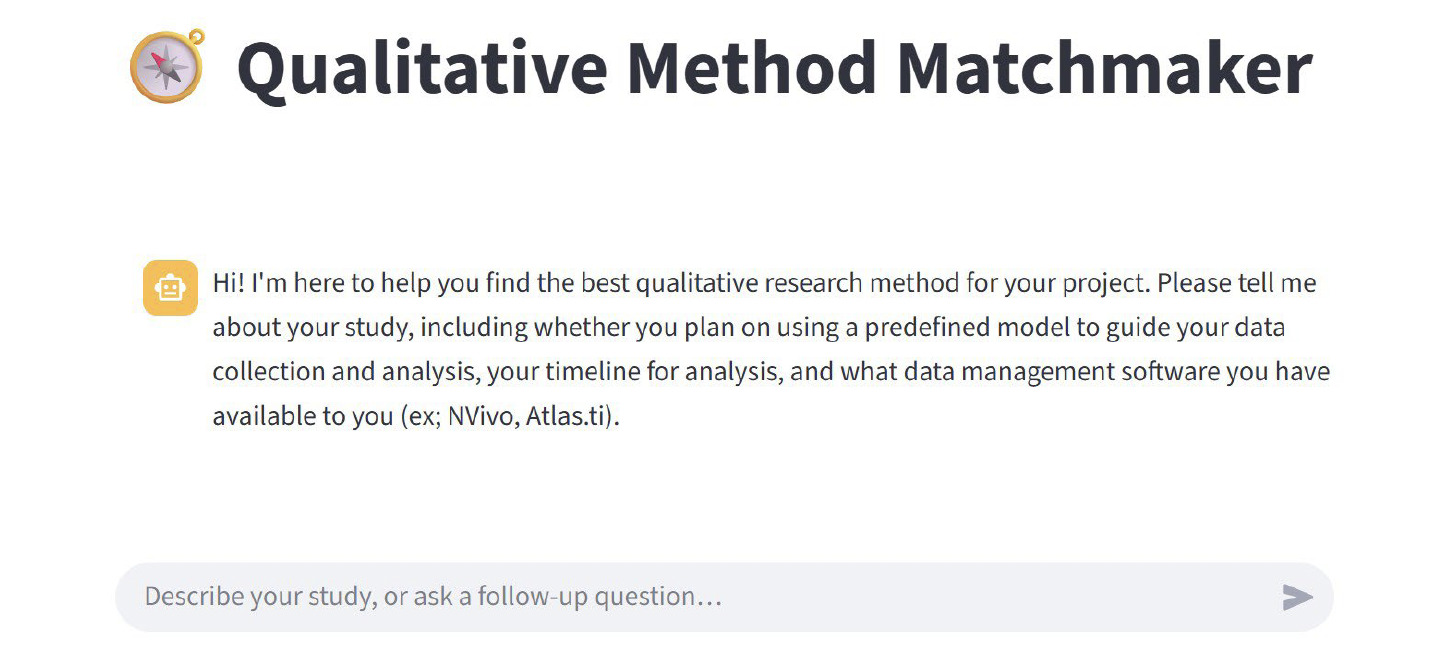
To demonstrate how the finalized Qualitative Method Matchmaker functions, Figure 1 displays the landing page and Figures 2 and 3 present examples of the tool’s outputs using a real-world study description. These examples show how the tool synthesizes user-provided study characteristics to recommend an epistemologically aligned qualitative method, sampling strategy, analytic considerations, and trustworthiness techniques. The screenshots below reflect the final version of the interface and output structure used within RTI’s internal environment.
Decision Pathway and Method Mapping
The Qualitative Method Matchmaker takes a stepped decision pathway that aims to pair epistemological stance with methodological approach. The first distinction asks whether the researcher will use a pre-coded coding system without adding new codes during analysis. If so, the tool recommends classical content analysis, which pairs with probability sampling and downplays coding reliability in accordance with post-positivist suppositions (Table 2). If the researcher plans to embrace emergent results but starts off from a preconceived structure, the instrument recommends methods that blend deductive and inductive methods (Table 3). For studies using fully inductive investigations with no preconceived codes or theoretical support frameworks, the tool recommends methods prioritizing emergent category constructions and iterative sampling (Table 4).
Discussion
The Qualitative Method Matchmaker addresses a persistent challenge in qualitative research: the difficulty of aligning epistemology, methodology, and method in a transparent and practical way (Carter & Little, 2007; Crotty, 1998; Halpin, 2026; Lincoln & Guba, 1985). This issue is especially pronounced for early-career researchers, applied practitioners, and interdisciplinary teams, who often make methodological decisions without formal training in epistemological coherence (Caelli et al., 2003; Sandelowski, 1993). By guiding users through structured decision points, the Qualitative Method Matchmaker offers a tool that is both practical and pedagogical. It prompts users to reflect explicitly on their analytic goals, theoretical commitments, and resource constraints, helping them avoid the common pitfall of selecting methods on the basis of habit or convenience (Barbour, 2001; Patton, 2015). In this way, the Qualitative Method Matchmaker complements existing teaching approaches that emphasize critical methodological reasoning (Halatcheva-Trapp & Unterkofler, 2021; Roulston & Halpin, 2021). It can be used as both a research planning tool and an educational scaffold, offering both novice and experienced researchers a structured path to epistemological alignment. For applied research settings, the tool also addresses practical concerns that often drive methodological shortcuts. In time-sensitive environments, researchers may prioritize efficiency over rigor, leading to decisions that are epistemologically incoherent or methodologically inconsistent (Halpin, 2024; Torrance, 2012). By integrating rapid and pragmatic approaches (e.g., rapid analysis, framework analysis) alongside more in-depth theory-building methods (e.g., grounded theory), the Matchmaker helps researchers select approaches that are both fit-for-purpose and philosophically grounded.
This study also demonstrates the potential for AI-assisted methodological consulting in qualitative research. By incorporating the decision tree into an AI-powered chatbot using graph-based RAG architecture, the Qualitative Method Matchmaker provides personalized recommendations based on user response, mimicking the work of a qualitative consultant. AI-assisted tools in qualitative research are still relatively unexplored, in contrast to their use in quantitative meta-analysis or automation of systematic reviews (Clark et al., 2025). Our project contributes to the emerging literature on AI applications in human-centered, interpretive fields by illustrating that AI can support methodological decision-making. AI-driven guidance, however, raises questions regarding transparency, accountability, and the danger of over-relying on tool-provided recommendations (Montemayor, 2023). Later versions of the Qualitative Method Matchmaker will need to balance automation with reflective prompts that keep the researcher engaged with the reasoning process.
The iterative development process surfaced critical lessons about balancing usability with epistemological nuance. Expert reviewers consistently emphasized the need for clarity and simplicity, particularly for novice users, while also cautioning against oversimplification of complex qualitative logic. This tension is common in tool development that bridges methodological rigor with real-world constraints (Barbour, 2001; Sandelowski, 1986). In response, the Matchmaker development team focused on creating transparent decision pathways while providing linked resources to support deeper learning. This approach mirrors recommendations in the design of qualitative pedagogy, which presents scaffolding alongside opportunities for further exploration (Mason, 2002; Roulston & Halpin, 2021). The iterative process also highlighted the importance of interdisciplinary collaboration, as technical development (e.g., AI integration) required close consultation between programmers and qualitative methodologists to preserve conceptual integrity.
Several limitations should be acknowledged. First, the current version of the Qualitative Method Matchmaker covers a focused set of methods, primarily content analysis variants, grounded theory, framework analysis, and rapid analysis. Although this broadly covers common approaches in health services and applied research, other qualitative methods, such as phenomenology, ethnography, and narrative inquiry, are not yet included. We have planned future expansions to address this gap. Second, this project represents a beta-stage formative evaluation, focusing on expert feedback and internal testing. The tool has not yet undergone large-scale piloting in classroom settings or live project planning environments. As such, findings should be interpreted as preliminary, with additional usability testing needed. Third, although the tool guides users toward methodologically coherent choices, it cannot replace the nuanced judgment that experienced qualitative researchers bring to study design. The Qualitative Method Matchmaker is intended to support, rather than substitute for, human critical inquiry and reflection about the goals, assumptions, and purposes of a research project. Users may still require mentorship or consultation for complex projects involving multiple paradigms or mixed-methods designs (Levitt et al., 2017; Tracy, 2010).
Future work will pilot the Qualitative Method Matchmaker in both academic and applied research settings. Activities may include incorporating the tool into graduate-level qualitative methods courses, conducting user studies to assess learning outcomes and usability, and expanding the tool to include additional methodologies such as interpretative phenomenological analysis, ethnography, and narrative inquiry. The Qualitative Method Matchmaker offers a solution to a persistent challenge in qualitative research: aligning epistemology, methodology, and method in a transparent, accessible way. By combining structured decision support with AI-assisted guidance, the Qualitative Method Matchmaker is a reflective decision-support tool that promotes epistemological alignment in qualitative study design. It provides practical recommendations for method, sampling, and trustworthiness strategies while serving an educational function by scaffolding users’ awareness of how their philosophical assumptions shape methodological choices. Its iterative development process has laid the groundwork for continued refinement, expansion, and application in diverse research contexts. As qualitative inquiry continues to evolve, tools like the Matchmaker can play a critical role in promoting rigor, reflexivity, and methodological coherence.
Acknowledgments
Thank you to Ana Godwin and Jim Redden for your support. We thank Sara Andrews, Lawren Bercaw, Laura K. Wagner, and Katie Grimes for review of the Qualitative Method Matchmaker decision tree and model and thank Alison and Abigail Halpin for their invaluable input in preparing this manuscript. The authors used OpenAI’s ChatGPT (GPT-5.1) for light editorial assistance (e.g., wording suggestions and clarity edits). All substantive content and interpretations were developed by the authors.