
Introduction
Diabetes is the eighth leading cause of death among US adults, and an estimated 11.3 percent (37 million) of the US population has diabetes (Centers for Disease Control and Prevention, 2020). People with lower incomes are disproportionately affected by diabetes and have lower utilization rates for diabetes care services (Rabi et al., 2006). Managing and controlling glycemic levels for diabetes self-management requires sustaining the healthy habit of eating the recommended daily amount of fruits and vegetables while limiting unhealthy foods, which can be difficult for people with lower incomes because of the cost of and access to healthy foods (Goddu et al., 2015). People with food and nutrition security concerns do not have reliable access to adequate high-quality food to avoid hunger and stay healthy, and they may face additional barriers to successful diabetes management (Centers for Disease Control and Prevention, n.d.; Ippolito et al., 2017; Seligman et al., 2010). Access to grocery stores that prioritize space for fruits and vegetables and to options like farmers’ markets remains a significant challenge for people with lower incomes living in urban and rural communities (Powell et al., 2007).
Food Is Medicine (FIM) interventions can include a wide range of assistance, such as food “farmacies,” produce/healthy food prescriptions, and medically tailored meals. These interventions aim to increase access to fruits and vegetables and healthy food options for people with a diet-related chronic disease such as diabetes who are also experiencing food security concerns (Downer et al., 2020). Health systems typically offer FIM interventions through referrals to onsite services and to partner organizations that provide healthy food, health education, or both. Previous studies have affirmed that FIM interventions can successfully improve access to fruits and vegetables and other foods (Goddu et al., 2015). Other recent studies have found mixed results about the impact of FIM interventions on behavioral and clinical outcomes. Some indicate that participants in FIM interventions increased their fruit and vegetable intake, decreased their A1C levels, or both (Bhat et al., 2021; Bryce et al., 2017, 2021; Ferrer et al., 2019; Kerr et al., 2020; Seligman et al., 2015; Veldheer et al., 2021). However, a randomized controlled trial found no significant differences in glycemic control between individuals with type 2 diabetes who participated in a comprehensive FIM intervention and those who engaged in usual care (Doyle et al., 2024). Recent studies have also shown that culturally appropriate FIM and chronic disease interventions can contribute to improved health care outcomes and participant satisfaction among people from racial and ethnic minority groups (Berkowitz et al., 2020; Joo & Liu, 2020).
Diabetes self-management education and support (DSMES) services are typically offered by certified diabetes care and education specialists within health systems. Services include an evidence-based curriculum that can improve healthy lifestyle behaviors and diabetes outcomes but do not typically include the provision of healthy food. DSMES participants with lower incomes may experience greater challenges achieving their healthy eating goals than participants who have greater access to and can afford to purchase nutritious foods. Few, if any, studies have compared the effectiveness of DSMES services with and without a FIM intervention or documented ongoing implementation costs of FIM interventions. Additionally, the evidence is still emerging for culturally tailoring and scaling up FIM interventions (Downer et al., 2022).
We conducted a comparative case study focused on DSMES services with and without a FIM intervention to understand whether and how FIM interventions are being implemented in partnership with DSMES services. This study aimed to
-
understand FIM intervention characteristics, including how program staff culturally tailor FIM interventions to be relevant for and meet the needs and preferences of participants’ cultures;
-
assess the costs and resources needed to implement and scale up FIM interventions; and
-
assess the impact of FIM interventions on diabetes clinical outcomes among participants.
Methods
Guiding Frameworks
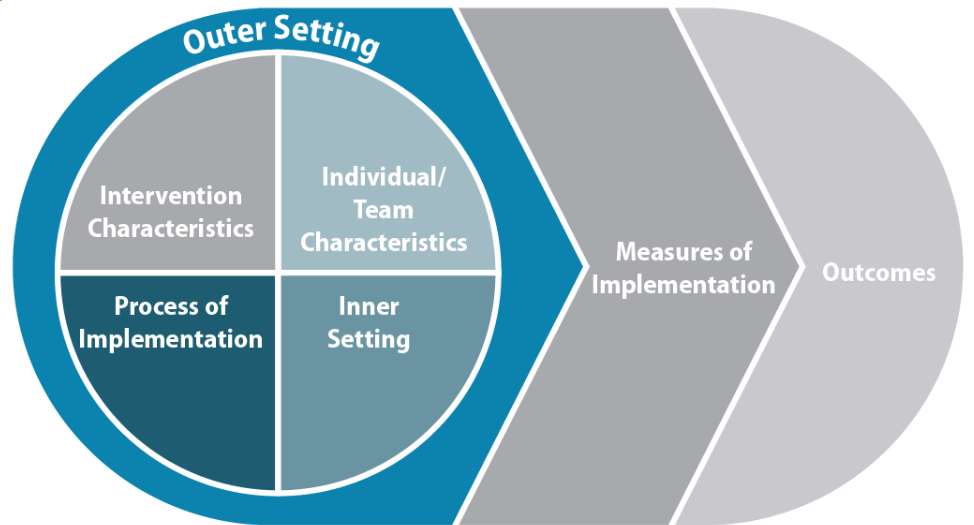
We applied an adapted version of the Consolidated Framework for Implementation Research (CFIR) (Rojas Smith et al., 2014) to design the evaluation (Figure 1). CFIR is an implementation science framework that assesses implementation factors of evidence-based interventions. Although our broader evaluation focused on multiple CFIR components, in this manuscript, we report on the intervention characteristics, including adaptability (the degree to which an intervention can be adapted to meet local needs) and cost (cost associated with implementing the intervention) (Damschroder et al., 2009). We also used principles of the Culturally Responsive Evaluation Framework (CREF) to design an evaluation that is sensitive to “the culture of the participants and the cultural environment in which the program exists.” (Frierson et al., 2002) Guided by the CREF, we applied a health equity lens to CFIR to focus the evaluation design and inform evaluation protocols. Applying a health equity lens involved acknowledging and understanding the social and political context and culture of communities involved in the evaluation, engaging communities in the evaluation process, assessing whether and how interventions meet the needs of individuals experiencing inequities in access and outcomes, and assessing changes in health inequities (Centers for Disease Control and Prevention, Division of Community Health, 2013; Venkateswaran et al., 2023).

Site Selection
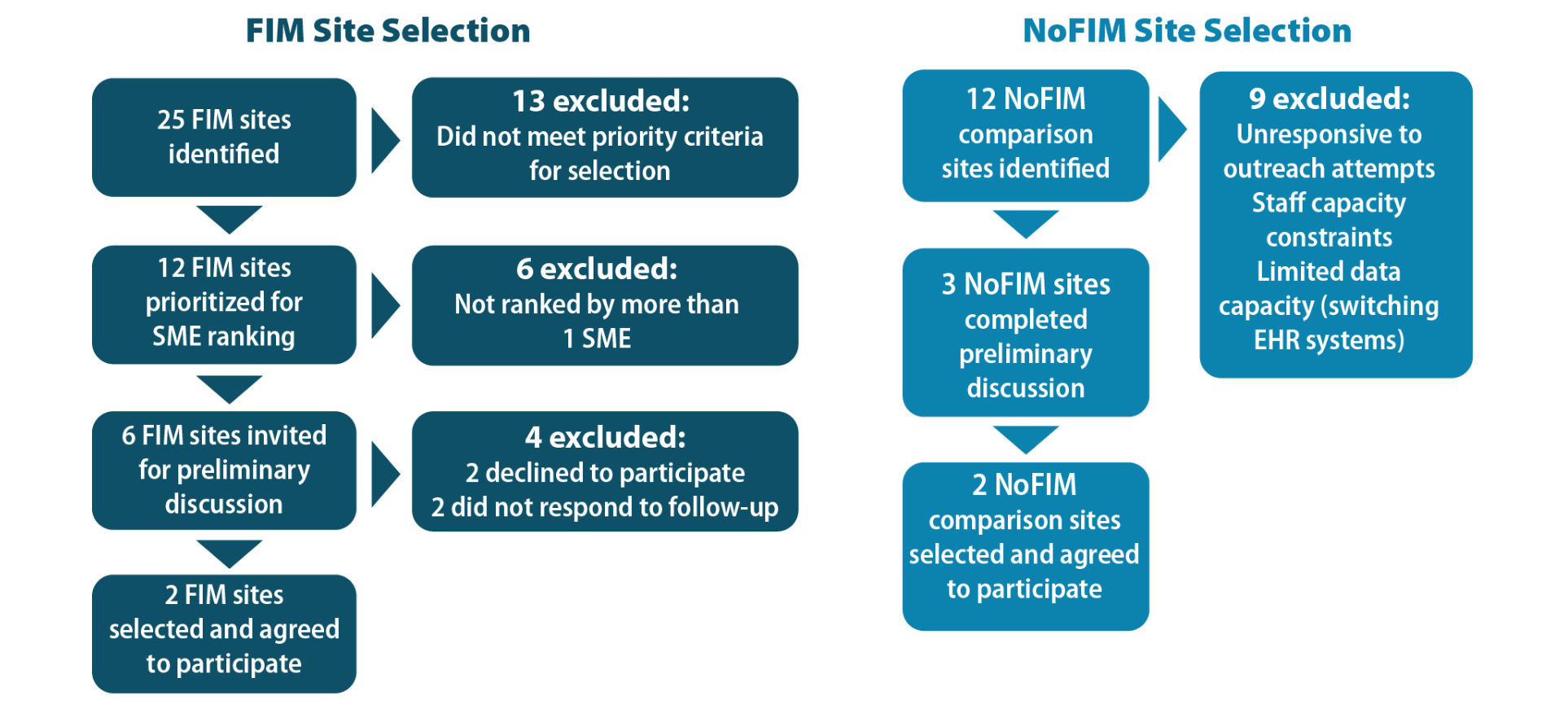
In alignment with the contracted study design and available resources for the study, we selected four sites to participate in this evaluation: two sites that offer DSMES services and a FIM intervention (hereafter referred to as FIM sites or individually as FIM-1 and FIM-2), and two comparison sites that offer DSMES services without a FIM intervention (hereafter referred to as NoFIM sites or individually as NoFIM-1 and NoFIM-2). Figure 2 presents our selection process.
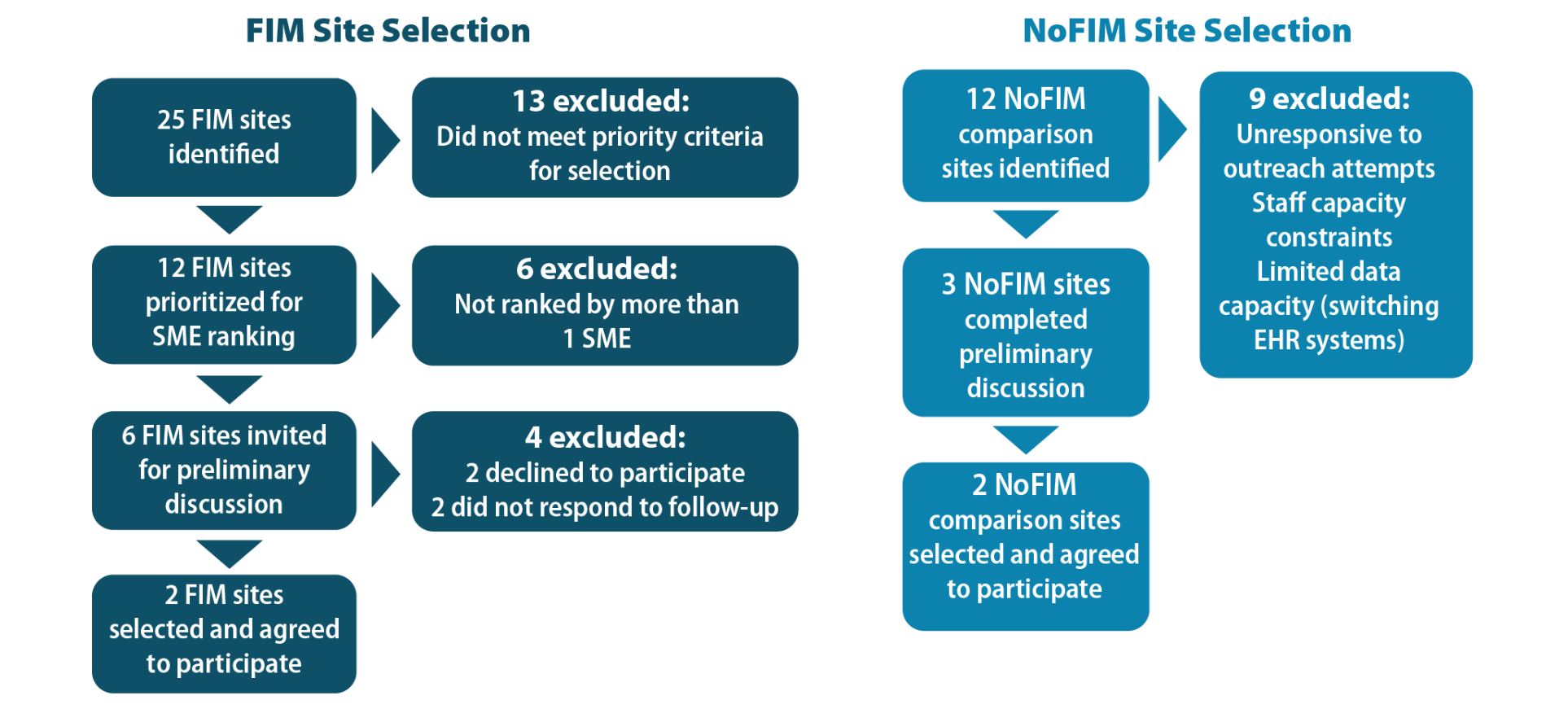
The study team identified 25 potential FIM sites through recommendations from subject matter experts (SMEs) and online searches. We identified a diverse group of SMEs affiliated with community-based organizations and universities through our professional networks, online searches, and relevant peer-reviewed journal articles. We narrowed the list to 12 sites that were either nominated by an SME or identified through an online search and had publicly available information that they met one or more of our priority selection criteria:
-
Offered American Diabetes Association [ADA]–recognized or Association of Diabetes Care & Education Specialists [ADCES]–accredited DSMES services
-
Had been implementing a relevant FIM intervention for at least 1 year at time of selection
-
Served people with lower incomes
-
Served people who are African American, Hispanic/Latino, and/or American Indian
SMEs then recommended their top four FIM sites for selection, and we prioritized sites that two or more SMEs recommended. We invited these four prioritized FIM sites to participate in a preliminary discussion to learn more about their interventions, including whether and how they culturally tailored their interventions. One site declined to participate because of staffing constraints, and another site did not respond to our outreach after the call. We invited the remaining two FIM sites to participate; however, one declined. The team then invited two alternate FIM sites to participate in a planning discussion and selected one of them (the other alternate site was unresponsive to follow-up outreach). This selected site accepted the invitation to join the study.
For each of the four FIM sites that we considered (the two FIM sites that we initially selected and the two alternates identified as potential replacements for the site that declined to participate), we identified three potential comparison sites implementing ADA-recognized or ADCES-accredited DSMES services in cities with similar demographic composition as the city where the FIM site was located (using US Census Quick Facts as our source). Three of the 12 potential comparison sites responded to our outreach efforts and expressed interest in learning more about the study; we conducted pre-selection phone calls with these three sites before finalizing our selection of the two intervention and two comparison sites. We selected sites in pairs, one FIM and one NoFIM site, in similar geographic areas and serving similar priority populations.
All selected sites offered DSMES services; however, neither of the two FIM sites had a formal linkage between DSMES services and their FIM intervention, and very few individuals at these sites participated in both DSMES and FIM.
We implemented a data use agreement with the four study sites. The FIM sites each received a $2,000 stipend, and the comparison sites each received a $1,000 stipend for their participation in the study. FIM sites received a larger stipend because they participated in a greater number of key informant interviews and provided more quantitative data (i.e., clinical outcome data and implementation costs) than the comparison sites. The institutional review boards at RTI International and the Centers for Disease Control and Prevention determined this project was a program evaluation and not human subjects research; therefore, institutional review board approval was not required.
Description of DSMES Services and FIM Interventions at Selected Sites
DSMES Services
All four sites offer ADA-recognized or ADCES-accredited DSMES services, which meet the National Standards for DSMES (Davis et al., 2022). Table 1 provides a high-level overview of how each site structures its DSMES services. All sites require a physician referral for DSMES services. Three of the sites begin with an individual intake or assessment. All sites offer DSMES classes in various lengths and formats and include at least one follow-up as part of their services. Some sites include optional services such as consultations with a dietitian, monthly sessions, or medical nutrition therapy.
FIM Interventions
Both FIM sites provide a FIM intervention and DSMES services, which operate independently and are not formally linked. The FIM interventions at each FIM site have different components (Table 1). FIM-1 launched their 12-week FIM intervention in 2020, and it is free for anyone with an A1C of more than 7.0. It primarily serves people who are African American and White but also serves people who are Hispanic or Latino. The FIM intervention at FIM-2 launched in 2018 and is free for people with a diet-related chronic disease who have food security concerns and in-network insurance to cover their participation. It is currently offered in two clinics and primarily serves people who are Hispanic or Latino; a smaller proportion of participants are American Indian.
Data Collection
We used a convergent parallel mixed methods approach by collecting qualitative and quantitative data from each site separately and concurrently (Creswell, 2014). We collected qualitative data via interviews to understand how sites were culturally tailoring their FIM interventions and DSMES services and collected quantitative data to assess FIM intervention implementation costs and participant outcomes.
Interviews with Program and Clinical Staff
We developed semistructured interview guides that aligned with CREF and CFIR components and collaborated with the primary contact at each site to identify interviewees, including site staff and referring physicians. Neither FIM site identified a referring physician to take part in an interview. We conducted 23 program and clinical staff interviews across all four sites between January and February 2023 (Table 2). The interview team included one interviewer, one notetaker, and, when available, a third colleague to ask clarifying questions as needed. We invited sites to provide feedback on the semistructured interview guides in advance of the interviews and made minor revisions to ensure the guides were comprehensible and staff members could answer the questions.
FIM Intervention Costs
We developed the FIM cost data collection instrument to ensure we obtained cost and resource data to scale up the intervention consistently across the two FIM sites. The study team used this Excel-based instrument to gather retrospective information on FIM expenditures for five resource categories: labor/personnel, non-consumable equipment (purchased once and used multiple times without being used up), consumable materials, contracted services, and indirect/overhead costs. We collected costs associated with start-up and ongoing intervention delivery once participants were enrolled. FIM-1 reported its total start-up costs and average monthly ongoing intervention costs. Because of data unavailability, FIM-2 only reported average monthly ongoing intervention costs. We requested that labor costs be further allocated across primary intervention activities. We conducted a webinar for program staff on how to complete the cost data instrument.
Participant Data
Sites provided participant demographic information (e.g., age, sex, race, ethnicity, insurance status), program participation (number of participants, number and type of visits, number of participants who completed DSMES services/FIM program), and clinical outcome measures (e.g., A1C levels, blood pressure, cholesterol, weight, emergency room visits). Sites abstracted de-identified data for participants with diabetes from their electronic medical records (EMRs).
Analysis
Qualitative Analysis of Interview Transcripts
We drafted a codebook to conduct deductive coding; specifically, we developed an initial set of codes based on the guiding evaluation framework and evaluation priorities. The codebook included the code names and definitions, notes on how to apply each code, and an example quote. Two teams of two analysts pilot-coded the same transcript using qualitative coding software NVivo 12 to establish inter-rater reliability. The analysts achieved more than 80 percent agreement in their pilot coding and reconciled differences in coding. After pilot coding and reconciliation, each team of analysts coded two more transcripts independently and worked together to review and resolve any discrepancies. Analysts divided the remaining transcripts and coded them independently. The analysts then reviewed coded data to identify emergent themes within and across sites that address each evaluation question (Patton, 2002). This analytic approach has been found to be a trustworthy approach for maintaining data integrity (Williams & Morrow, 2009).
Quantitative FIM Intervention Cost Analysis
We reviewed completed cost instruments to ensure correct and reasonable data entries and worked with program staff to resolve any identified issues. We calculated total intervention costs for each site by aggregating costs across resource categories. Within each category, we aggregated costs across all entries (or staff). We calculated annual ongoing labor costs for each staff member by multiplying their reported annual salary (including fringe benefits) by the percentage of time spent on the intervention. We calculated labor costs for each activity by multiplying the percentage of staff time reported for each activity by total labor costs. We annualized ongoing program delivery costs for nonlabor categories by multiplying these average monthly costs by 12.
Only FIM-1 was able to provide start-up costs. Therefore, for FIM-1 only, we calculated start-up labor costs by adjusting reported annual salaries (including fringe benefits) by the number of hours worked on the FIM program during start-up. We combined ongoing costs with the number of FIM-1 participants served per year to calculate costs per program participant. FIM-1 reported an estimated dollar amount for their monthly indirect costs, which we multiplied by 12 to estimate their annual indirect costs. All FIM-1 participants had diabetes; thus, the costs for FIM-1 represent the costs of serving participants with diabetes.
FIM-2 included participants with and without diabetes and reported labor costs required to deliver the intervention to both sets of participants. Given that 22 percent of participants had a diabetes diagnosis, we assumed that 22 percent of reported labor costs would be required to serve participants with diabetes. FIM-2 reported nonlabor costs for participants with diabetes only; thus, no additional adjustment was needed for nonlabor costs. FIM-2 reported that their indirect costs represent 10 percent of their direct costs; therefore, we calculated indirect costs for FIM-2 by multiplying the sum of labor, consumable, and contracted services costs by 10 percent.
Quantitative Participant Data Analysis
De-identified participant data were checked for completeness, response standardization, and matched units of measure. Using Stata 17, we calculated descriptive statistics to detail participant demographics and determine the dose of DSMES and FIM services. Using a Wilcoxon signed-rank test, we used a pre-post design to assess clinical outcomes near the time participants started the FIM or DSMES services compared with outcomes near the time participants finished the services.
We received participant outcome data from FIM-1 and both NoFIM sites. Because we did not receive data from FIM-2, we present findings from our review of clinical outcomes for participants at FIM-1 and its selected comparison site (NoFIM-1) only. We did not include NoFIM-2 in this analysis because we did not receive data from its paired intervention site. To identify the most appropriate pre- and post-program measurements, we selected the clinical observations closest to the beginning and end of each person’s participation in the FIM program or DSMES services. Seventy-five participants were excluded from the analysis because there was no pre- and post-program measure, only one clinical measurement was taken, or no clinical measures were recorded. Most clinical outcomes were not taken at the FIM or DSMES program but were completed when participants visited a health care provider not associated with the FIM or DSMES services. For example, a participant who visited their endocrinologist 2 months after completion of the DSMES program would have their A1C measured during that visit.
Once the initial site-level analyses and pre-post analyses were completed, we compared sites using Student’s t-tests and Pearson’s chi-square tests (Pearson, 1900; Student, 1908). In this comparison, we identified differences in demographics, patient engagement, and clinical outcomes. We did not compare NoFIM sites with each other because this analysis was not relevant for achieving our study objectives.
Results
Intervention Characteristics
Cultural Tailoring Strategies and Adaptations to Meet Participant Needs
Table 3 describes adaptation strategies that FIM and DSMES staff members employed within each site to identify and address participants’ cultural, financial, transportation, and language- and literacy-related needs. Respondents across all sites reported that they informally identify participants’ cultural needs and preferences by getting to know each participant during one-on-one sessions. Respondents across all sites described common strategies for culturally tailoring their DSMES services, and both FIM sites reported common strategies for culturally tailoring their FIM interventions. DSMES staff at one FIM site and both NoFIM sites recommend menus and foods that meet DSMES participants’ cultural needs and preferences. FIM program staff at both FIM sites adapt participants’ favorite recipes to incorporate cultural preferences. All sites tailor their educational and marketing materials to be culturally appropriate. All sites also offer translation services for non-English-speaking participants and some printed educational and marketing materials in English and Spanish. Both NoFIM sites had one DSMES staff member who is fluent in Spanish and can interact with Spanish-speaking participants. The following quotes illustrate how program staff identify and address participants’ cultural needs and preferences.
“During that initial phone call, we ask them about barriers. And so, one of those around access, but also is there anything related to your culture, your religion … that impacts how you care for yourself, how you manage diabetes, your food choices?” – FIM-2 Program Staff
“I’ll say, ‘Hey, do you have a recipe that I can tweak?’ They may bring me a recipe, and so I sit down and I really go through cooking, testing, cooking and testing. How can we tweak this recipe so that it’s more healthy? Especially if it’s something they eat on the regular. Even when you talk about rice and beans and stuff like that, so you’ve got rice and beans, both carbohydrates. Well, how do I make that healthier? That’s what we work on. That has been really, I think, one of the points that really sort of seals and sort of brings people in where they really feel welcomed, they feel seen.” – FIM-1 Program Staff
“…if somebody is Spanish-only speaking, they will do the [DSMES] classes one-on-one with one of our diabetes educators. And if they have another language that we don’t speak fluently, meaning any language other than Spanish or English, we do have these translators on wheels where you dial in to get into the translator company and you pick your language and they will sit in on the meeting, the consultation, and they will translate everything.” – NoFIM-2 Program Staff
Respondents identified additional common needs among DSMES and FIM participants, including financial, transportation, and language and literacy needs that pose challenges for accessing services and managing diabetes.
“The transportation issue would be one of the biggest challenges. But, there again, we have a workaround by allowing it to be online. We videotape the cooking demonstration and the education session so they can view it online, and if they have a computer and access to the internet, they can view it any time that’s convenient for them.” – FIM-1 Program Staff
“We teach [diabetes education using] two types of books. One’s going to be your standard, which I believe it’s a sixth-grade level reading, and then we have in the works a lower-literacy book for individuals who may not read at that level.” – DSMES-2 Program Staff
FIM Intervention Costs to Inform Scalability
Table 4 shows start-up costs (which only FIM-1 reported) and ongoing costs for both FIM-1 and FIM-2. FIM-1 incurred start-up costs of $187,615 from January 1, 2020, through July 1, 2020. Costs of equipment (e.g., building supplies for a teaching kitchen, kitchen appliances, and furniture) accounted for the largest portion of these costs ($77,846), followed by labor ($59,769) and costs of contracted services (e.g., construction and remodeling of classrooms and kitchens) ($50,000).
Ongoing annual costs for FIM-1 and FIM-2 were similar ($102,011 vs. $95,652; Table 4). Ongoing costs for FIM-1 were $2,000 per participant, with 51 participants in the program (data not shown). Although we were unable to confirm the number of participants served by the program at FIM-2 during the study period, one interviewee estimated that they serve about 55 participants with diabetes annually, which would result in an estimated cost of about $1,750 per participant. Labor costs were higher in FIM-1 than FIM-2 ($53,972 vs. $30,377). The FIM-1 program, which features a 12-week program of weekly 2-hour education and cooking demonstration classes, likely requires more staff time than the FIM-2 program, which focuses on food distribution and offers cooking and nutrition classes as an optional program benefit. As such, FIM-2 had higher costs of consumable supplies than FIM-1 ($54,890 vs. $21,168). In both programs, the largest portion of labor costs was spent on program delivery (57 percent in FIM-1; 42 percent in FIM-2). In FIM-2, administrative activities also took up a significant amount of staff time, at 37 percent of total labor costs (vs. 13 percent in FIM-1). The percentage of time spent on participant recruitment also varied across the two sites (13 percent in FIM-1; 3 percent in FIM-2), which is consistent with the sites’ different recruitment models. FIM-1 makes robust community outreach efforts to recruit participants, whereas FIM-2 has a system-wide universal health screening tool that providers use to identify and refer eligible participants.
FIM Intervention Effectiveness
Site-Specific Clinical Outcomes
We present clinical outcome data for FIM-1 and NoFIM-1, and each site defined completion status as outlined in the methods section. All pre- and post-measures were taken within 6 months of program participation. Table 5 shows the number of participants who completed each program.
At both sites, most participants completed services (86.5 percent, n = 109, at NoFIM-1; 50.0 percent, n = 5, for DSMES and FIM participants; and 73.2 percent, n = 30, for FIM only at FIM-1). Because clinical observations were taken by a medical provider unrelated to the FIM program, some participants who did not complete the program did have a second clinical observation after they stopped participating in FIM. These participants are included in the analysis below.
Comparison of FIM-1 and NoFIM-1 Demographics and Clinical Outcomes
FIM-1 and NoFIM-1 both provided demographic data (Table 6) and pre- and post-program measures for A1C (Table 7). NoFIM-1 had higher percentages of African American participants (62.1 percent vs. 41.2 percent at FIM-1; P = .02) and male participants (42.1 percent vs. 21.6 percent; P = .01) than FIM-1. NoFIM-1 also reported higher rates of participants who completed college or post-graduate education (67.1 percent vs. 22.2 percent; P = .04) and had health insurance: 53.2 percent with private insurance, 44.4 percent with public insurance, and 2.4 percent uninsured, compared with 50 percent, 30 percent, and 20 percent, respectively, at FIM-1 (P = .02). There was no significant difference in average age between the two programs (60.9 years at NoFIM-1 vs. 60.7 years at FIM-1, P = .46). More NoFIM-1 participants completed the program (86.5 percent, n = 109, vs. 68.6 percent, n = 35; P = .006, data not shown).
Pre- and post-program A1C measures were available for 54.9 percent of participants at FIM-1 and 61.9 percent at NoFIM-1. At NoFIM-1, more African American participants than White participants were missing one or both pre- and post-program measures (42.9 percent vs. 33.3 percent, P = .038); there were no significant differences in the rates of missing data between groups at FIM-1.
Participants at FIM-1 had an average A1C decrease of 0.64 percentage points between their pre- and post-program measures (P = .017), and participants at NoFIM-1 had an average A1C decrease of 1.86 percentage points (P < .001, Table 7). Participants’ A1C ranged from 4.9 percent (well controlled) to 15.7 percent (extremely elevated); a healthy A1C is below 5.7 percent, with 6.5 percent or above considered within the range of diabetes. Participants at NoFIM-1 had a significantly greater average A1C decrease than FIM-1 participants did, both among all participants (P = .007) and when only participants who completed the programs are compared (P = .019, Table 7). Participants with a decreased A1C had an average decrease of 2.2 percentage points; participants with an increased A1C had an average increase of 0.71 percentage points.
Discussion
Results from this study deepen our understanding of (1) whether and how FIM interventions are being implemented in partnership with DSMES services in two selected programs, (2) whether and how staff members in these two programs are tailoring FIM interventions to meet the cultural needs and preferences of participants, and (3) considerations for scaling up FIM interventions. This study also identified important questions that must be answered to improve our understanding of the impact of FIM interventions on diabetes clinical outcomes.
Linkages Between DSMES Services and FIM Interventions
At both FIM sites, the DSMES services and FIM interventions operate independently and are not formally linked. DSMES staff do not have a formal process in place to refer their participants to the FIM programs, and FIM program staff are not screening participants for diabetes and referring them for DSMES services as a standard practice. Therefore, our evaluation primarily provides insight into FIM programs as stand-alone programs rather than as an additional component for DSMES participants with food security concerns. This aligns with recently published FIM studies that describe serving participants with diabetes, but do not mention partnering with DSMES services to deliver the intervention (Bryce et al., 2017, 2021; Ferrer et al., 2019; Seligman et al., 2015).
Although respondents at FIM-1 noted that DSMES and FIM staff have considered establishing a more formal linkage between the two programs, only 10 of the 51 FIM participants with diabetes in 2022 participated in any DSMES services. One FIM staff member at this site envisioned the FIM program becoming part of a standard treatment plan for all patients diagnosed with type 2 diabetes, which would facilitate increased participation. Respondents at FIM-2 described occasionally cross-referring participants with diabetes for DSMES services and vice versa; however, the two programs have different eligibility requirements, which may impede referrals.
There are, however, promising examples of integrating fruit and vegetable prescription vouchers with DSMES services; one recent study provided vouchers valued at $28 to $140 per month during monthly group-based DSMES classes for 7 months and observed a significant average decline in HbA1c of -1.3 percentage points among participants (Veldheer et al., 2021). Additionally, one recent review concluded that providing DSMES services for participants with diabetes who have limited resources will be critical for future FIM interventions. However, this study review also described challenges with optimizing clinical referrals to community-based organizations, including underfunding of community-based organizations that provide access to healthy foods, such as food banks (which rely on shelf-stable donations) (Whitehouse et al., 2024). Establishing a formal linkage between DSMES services and FIM interventions would require sufficient resources to educate DSMES service providers about the FIM intervention and vice versa, to screen and refer eligible participants, to track cross-referrals, and to ensure long-term availability of healthy foods, including fresh fruits and vegetables.
Cultural Tailoring
When asked about cultural tailoring of their DSMES services and FIM interventions, respondents across all sites described surface-level strategies, which involve matching components of the intervention to observable characteristics of participants (Barrio & Yamada, 2010; Huang & Garcia, 2020; Resnicow et al., 1999; Vincze et al., 2021). For example, respondents described adapting recipes and menus to align with cultural food preferences, using peer-based and community outreach strategies, and translating program materials into different languages. As the FIM interventions mature, staff may want to consider embracing deeper structural approaches to tailoring, which involve examining the social, historical, and psychological factors, including poverty, that have contributed to inequitable access and disparities in health outcomes (Resnicow et al., 1999). In alignment with recommendations in the FIM Research Action Plan (Downer et al., 2022), funders may consider including sufficient time and resources in their funding opportunities for practitioners to engage participants of different racial and ethnic groups in program planning and design to ensure the FIM interventions reflect and honor participants’ lived experiences.
Considerations for Scaling FIM Interventions
The site selection process revealed that FIM interventions vary greatly in terms of eligibility criteria, screening and referral processes, program components, and tracking systems. We collected ongoing implementation costs for two FIM interventions, which can be used to inform scalability of similar FIM interventions within health systems that have similar staff and data capacity. Notably, ongoing implementation costs for both selected FIM interventions were similar ($102,011 at FIM-1; $95,652 at FIM-2), despite different recruitment processes and program components. Although we did not assess cost-effectiveness in our study, Wang and colleagues (2023) used a validated simulation model to estimate that produce prescription programs are highly cost-effective ($18,100/quality-adjusted life years) and could result in net societal savings of about $50 million over an average of 25 years (Wang et al., 2023). As these and other FIM programs mature over time, it will be important to evaluate the short- and long-term impact of different interventions within diverse types of communities (e.g., rural/urban, African American, Hispanic/Latino, American Indian/Alaska Native) to determine optimal strategies for scaling FIM interventions.
Impact of FIM Interventions on Diabetes Outcomes
FIM-1 launched its intervention during the initial wave of the COVID-19 pandemic. As a result, recruiting participants was challenging. Although participation has slowly increased, the number of participants reached remains small. This is consistent with other FIM studies based on small sample sizes (Bryce et al., 2017, 2021; Ferrer et al., 2019; Veldheer et al., 2021). Although the sample size at FIM-1 was small, we observed a statistically significant average decrease in A1C of about 0.64 percentage points among FIM participants (P = .017), which aligns with findings from a meta-analysis of FIM programs that found a pooled decrease in A1C of 0.8 percentage points across five studies (Bhat et al., 2021) and with findings from another review that found a pooled decrease in A1C of 0.47 percentage points (Hager et al., 2023). The average reduction in A1C in our study is also comparable to that achieved with glucose-lowering medications, which has been estimated at about -0.5 to -0.6 percentage points (Monami et al., 2013). Although DSMES participants at NoFIM-1 achieved an average decrease in A1C of 1.9 percentage points (P < .001), more than twice that of FIM-1 participants, previous studies suggest that DSMES participants generally experience an average decrease in A1C that is comparable to FIM-1 participants (0.55 to 1.0 percentage points) (Smith et al., 2021; Steinsbekk et al., 2012; Tshiananga et al., 2012).
Our FIM-1 findings differ, however, from those in a randomized controlled trial, which found significant increases in food security and fruit and vegetable intake among FIM participants but no significant differences in self-management behaviors or A1C (Seligman et al., 2018). Additional studies of FIM interventions will allow for further exploration of the dose-response relationship between FIM participation and health outcomes. The small sample sizes limited our statistical power, and a larger sample size would allow analysts to control for factors that may affect eligibility for the FIM interventions and health outcomes, such as income, education, and insurance status. Overall, the data trend in a promising direction, showcasing the potential effectiveness of the FIM-1 program and the effectiveness of NoFIM-1 DSMES services.
Continuous monitoring and improvement may be essential to ensure FIM interventions are achieving the intended impact for all participants. FIM-1 had a stand-alone tracking system, access to a robust EMR system, and sufficient staff capacity to extract participant-level health outcome data. To the extent that resources allow, FIM staff may consider developing a stand-alone system to track participation, behavioral outcomes, and clinical health outcomes to mitigate challenges with extracting EMR data for monitoring and evaluation.
Limitations
Our study has several limitations. First, this was a comparative case study that evaluated DSMES services and FIM interventions in a small number of sites. The services and interventions at these sites may not be comparable to those offered in other health systems. Second, our pre-post intervention analysis was based on small sample sizes, and we were missing pre- and post-data for many participants, making it difficult to detect the effect of the interventions. Furthermore, we were unable to assess potential confounders (e.g., diabetes prescriptions, medication adherence, comorbidities) or intermediate measures (e.g., fruit and vegetable consumption) at FIM-1 and NoFIM-1, and FIM-2 lacked pre- and post-participant outcome data; thus, we were unable to assess its intervention effectiveness. Third, we were unable to gather feedback on the FIM intervention directly from participants. We captured staff perception of participants’ satisfaction with the FIM intervention; however, this does not provide a complete picture of participants’ experience. Fourth, FIM intervention cost data were self-reported retrospectively by staff; however, in previous cost studies, we found that these types of cost data collections typically produce accurate estimates of resources required to implement programs (Khavjou et al., 2014; Yarnoff et al., 2019).
Conclusion
Results from our evaluation suggest that FIM interventions may be a feasible approach to improving healthy food access among people experiencing food security concerns and may be a promising approach for addressing food and nutrition security as a social determinant of health. Our evaluation is limited to two specific FIM interventions during a specific period, and the intervention and results may change as the FIM interventions mature. This case study yielded lessons that could be scaled or adapted in other settings: (1) FIM programs may benefit from embracing structural approaches to tailoring and engaging participants of different racial and ethnic groups in program planning, (2) health system–wide screening and referral to FIM programs may be an effective way to increase enrollment, and (3) developing a system for tracking FIM program participation and outcomes may mitigate challenges with extracting EMR data for monitoring and evaluation. Future research is needed to better understand (1) the short- and long-term impact of different types of FIM interventions on behavioral and clinical outcomes among people living with diabetes, (2) whether FIM interventions provide an added benefit to participants when implemented in conjunction with DSMES services, and (3) the resources required to apply deep structural approaches to cultural tailoring and how these approaches affect participation rates and outcomes among people from different racial and ethnic groups.
Data Availability Statement
The data supporting the current study are protected and are not available because of data privacy laws.
Acknowledgments
We would like to express appreciation to all the individuals who participated in the interviews for this study and facilitated the extraction and reporting of de-identified participant data and FIM program cost data.
Funding support was provided by the Centers for Disease Control and Prevention (CDC) (Contract No. HHSD2002013M53964B) to RTI International. The findings and conclusions in this report are those of the authors and do not necessarily represent the official position of CDC.